
14 August 25

The process leading up to the investigation demonstrates how this president has eroded longstanding ethical norms governing the relationship between the White House and the Justice Department. As the head of the executive branch, the president has authority over all the agencies in his cabinet, including the Justice Department; but since the abuses of Watergate, all subsequent presidents have taken steps to remove themselves from individual prosecutorial decisions while still leading on policy matters.
The Justice Department manual instructs that “the legal judgments of the Department of Justice must be impartial and insulated from political influence. It is imperative that the department’s investigatory and prosecutorial powers be exercised free from partisan consideration.” To that end, the manual sharply restricts contacts between prosecutors and the White House in criminal cases. With Mr. Trump using his social media megaphone, those limits don’t exist.
Ms. James earned the president’s ire by accusing him and the Trump Organization with fraud in connection with the valuation of real estate and winning a $454 million judgment against them (Mr. Trump is appealing). Mr. Schiff was a leader, in his days as a member of the House of Representatives, of the investigation of Russia’s efforts to help Mr. Trump win the 2016 election, and he became the lead House manager in Mr. Trump’s first impeachment.
Among many other insults, Mr. Trump has reposted a call for Ms. James to be “placed under citizens arrest” for “blatant election interference and harassment,” and over the years he’s denounced “Shifty Schiff,” demanding that he be “questioned at the highest level for Fraud … Treason.”
If there were any doubt that these investigations amount to political hit jobs against two of President Trump’s most indefatigable political adversaries, the issue was settled with Attorney General Pam Bondi’s pick to lead the inquiries — Ed Martin, the Justice Department official who was so unqualified and partisan that he couldn’t win confirmation in the Republican Senate to be the United States attorney in Washington. As a consolation prize for that failure, Mr. Trump appointed him to lead the so-called Weaponization Working Group, the Orwellian name for the prosecutorial payback operation designed to build cases against those who investigated Mr. Trump during the Biden administration. Some of Mr. Martin’s first targets are Ms. James and Mr. Schiff. Far from displaying the open mind that honorable prosecutors should demonstrate, Mr. Martin said his goal was to “stick the landing” against the two Democrats.
But a president’s critics, like the president himself, should not be above the law, so what, then, is the evidence against Ms. James and Mr. Schiff? For both, the issues relate to real estate and mortgages, and the facts about them seem already well established.
The case against Ms. James has three parts, First, in 2023, she financed the down payment to help her niece buy a single-family home in Norfolk, Va. According to her attorney Abbe Lowell, Ms. James signed several documents that made clear that her niece, not Ms. James herself, would live in the house. But on one form, a power of attorney, she indicated that she herself would live there, which was obviously a mistake. In light of the other documents, the bank itself could not have been misled, and in any event, the mistake on the power of attorney brought Ms. James no monetary gain.
In 2001, Ms. James bought a four-story brownstone in Brooklyn with separate apartments for herself, her mother, her brother and a family friend. On one form, filed 24 years ago, the property was listed as having five units, not four. At all other times, she correctly listed it as four units. Last, in 1983, Ms. James’s father bought a house in Queens for the family. On the mortgage application, he mistakenly listed Ms. James, who was just out of college, as his spouse, not his daughter, although other documents listed their relationship correctly. Ms. James has denied any wrongdoing, and according to her lawyer, the accusation that she may have financially benefited is baseless.
In a demonstration of the ferocity of the legal assault on Ms. James, her office was subpoenaed last week in a different criminal investigation, led by Justice Department prosecutors in upstate New York. This inquiry is apparently aimed at proving that Ms. James committed some kind of misconduct during the fraud investigation of Mr. Trump and his company, as well as in a separate lawsuit that her office filed against the National Rifle Association. The only basis for this case, it seems, is that the president was unhappy with the outcome of both cases, which Ms. James’s office won.
As for Mr. Schiff, the investigation of him is rooted in the fact that like many members of Congress, he owns two residences, one in his home state of California and another in the Washington suburbs. According to mortgage documents, Mr. Schiff listed both as his “primary” residence, which, according to a social media post by the president, represented an effort to “get a cheaper mortgage and rip off America.” At the time Mr. Schiff applied for the mortgages, he was already in Congress, so the banks knew he had two residences. There does not appear to be any deception by Mr. Schiff and he has publicly denied the claims. (In addition, Mr. Schiff apparently last applied for a mortgage in 2012, which means any possible crime would be outside the 10-year statute of limitations; that would probably apply to most of the charges against Ms. James as well.)
For the moment, Ms. James and Mr. Schiff are essentially powerless. There is no remedy in federal law to stop even clearly meritless investigations. At best, the two elected officials can look forward to months of detailing their personal financial arrangements; in other words, they will be compelled to violate the political maxim that holds if you’re explaining, you’re losing.
Worse yet, their legal fates are in the hands of a dedicated political enemy who will be able to present the case for indictment to a grand jury. There, in the famous utterance of Sol Wachtler, the onetime chief judge of New York’s Court of Appeals, prosecutors can get a grand jury to “indict a ham sandwich.” The two elected officials will be able to offer formal legal and factual defenses only after they are indicted — that is, when they are criminal defendants in federal court, which is, to put it mildly, hardly a welcome forum.
President Trump has always been a master of projection. His accusations of misconduct nearly always replicate what he himself has done. So it is with “weaponization,” which is how he describes the entirely legitimate efforts during the Biden years to hold him accountable for his financial chicanery and his efforts to overturn his loss of the 2020 election, among other misdeeds. Now, at his behest, his administration is turning that word against two of his most prominent critics.
For Mr. Trump, there may be few spoils of victory sweeter than the ordeal that Ms. James and Mr. Schiff will soon endure.
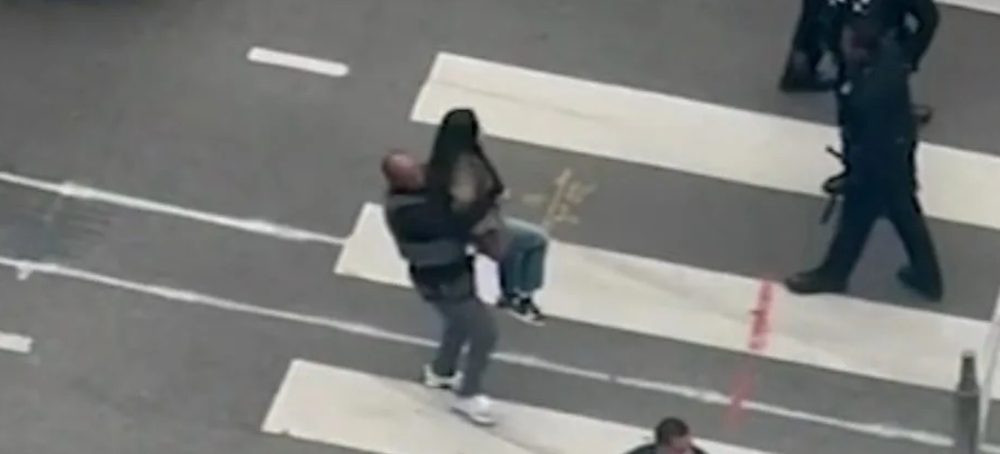 This an ICE agent with Andrea Velez in the air after he seized her during the raid in Downtown Los Angeles. She was held, she says, without water for the next 24 hours. (photo: ABC7)
ALSO SEE: Ice Deported Boy With Cancer and Two Other US Citizen Children to Honduras, Suit Alleges
Andrea Velez, 32, had just arrived at work in Downtown Los Angeles on June 24 when agents grabbed her and forced her into a car.
Velez told NBC4 News Los Angeles that an immigration raid was going on when she was slammed to the ground. Velez, a graduate of Cal Poly Pomona, who works in fashion was taken into custody while her mother, Margarita Flores, screamed at agents to stop.
“She’s a U.S. citizen,” Velez’s mother, an immigrant from Mexico, said through tears. “They’re taking her. Help her, someone.”
Velez said she was sitting in a detention center and was given nothing to drink for 24 hours. In total she spent two days in detention. She said that the ordeal has left her unable to physically return to work.
“I’m taking things day by day,” she told the station.
The incident had been notorious from the beginning. LAPD officers were called to the scene because it was reported as a “kidnapping” but did not intervene when it became clear it was an ICE action—even though it was against a U.S. citizen, ABC… Los Angeles previously reported.
Velez was charged with assaulting a federal officer while he was attempting to arrest a suspect. A federal criminal complaint alleged that the agent was chasing after a man but Velez stepped into the agent’s path and extended her arm “in an apparent effort to prevent him from apprehending the male subject he was chasing.” The complaint added that her arm hit the agent in the face.
Velez denied wrongdoing. She said that during the incident, someone grabbed her and slammed her to the ground. She tried to tell the agent, who was in plainclothes, that she was an American citizen. But he told her she was “interfering” and he was going to arrest her.
“That’s when I asked him to show me his ID, his badge number,” she said. “I asked him if he had a warrant, and he said I didn’t need to know any of that.”
Velez said she repeatedly told ICE officers she was a U.S. citizen. When she was taken into a Los Angeles detention center, she gave officers her driver’s license and health insurance card to prove her citizenship status. She was still locked behind bars.
Velez’s family was unaware of her whereabouts for more than a day until lawyers for the family tracked her down.
Later, the Department of Justice (DOJ) dismissed her case without prejudice, meaning it could be reopened if prosecutors decide to.
Velez’s attorneys told NBC Los Angeles that they are exploring legal moves against the federal government.
Between 2015 and 2020, ICE erroneously deported at least 70 U.S. citizens, arrested 674 and detained 121. It is unclear how many have been mistakenly taken amid the Trump administration’s mass campaign to deport 1 million immigrants per year.
In January, U.S. citizen Julio Noriega was looking for work in Chicago when he was swept up in the mass raids. In May, Georgia college student Ximena Arias-Cristobal was detained after police pulled over the wrong car during a traffic stop. In June, a deputy U.S. marshal was detained in Arizona because he “fit the general description of a subject being sought by ICE.” That same month, a Ph.D. student named Job Garcia was tackled and thrown to the ground by ICE for recording a raid in Los Angeles.
A recent lawsuit claims that at least three American-born children have been removed from the country. The sudden banishment includes a 4-year-old boy with stage-four kidney cancer who was receiving critical, life-saving medical treatment in the United States. He was shipped from Louisiana to Honduras in April.
The Daily Beast has reached out to ICE for comment.
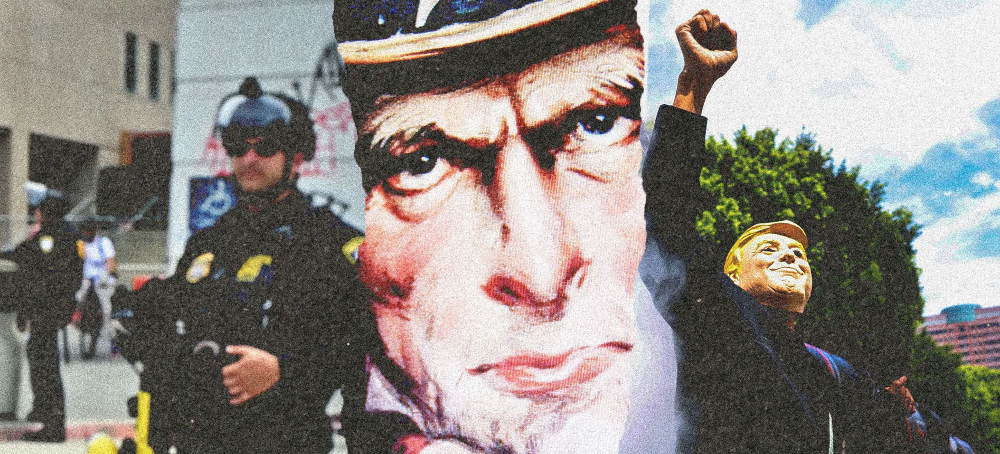 Memes shared by the White House, DHS, and ICE have used catchy TikTok tunes to normalize mass deportation and Christian nationalist narratives. Experts say that’s the point. (photo: Getty)
Memes shared by the White House, DHS, and ICE have used catchy TikTok tunes to normalize mass deportation and Christian nationalist narratives. Experts say that’s the point.
The catchy jingle advertising low-cost holidays on Jet2, a budget British airline, has been the viral meme of summer 2025. Its ubiquity was clearly not lost on the Department of Homeland Security’s communications team. Late last month, DHS published a video to its social accounts that incorporated the "Nothing Beats a Jet2 Holiday" tune alongside footage of ICE detainees in handcuffs boarding a deportation plane. The post was captioned: “When ICE books you a one-way Jet2 holiday to deportation. Nothing beats it!”
To many of the administration’s supporters, who responded to the Jet2 holiday post with crying-laughing emojis and American flags, the video was hilarious. One commenter wrote, “I thought this was a meme account at first!”
In recent months, official government social media accounts—primarily for the Department of Homeland Security, Immigration and Customs Enforcement, Customs and Border Protection, and the White House—have resembled parodies of themselves. But experts say it’s intentional: The memes these accounts share are core to the Trump administration’s propaganda strategy. Through them, with attempts at Gen Z humor as the gateway, the administration reinforces an “us vs. them” mindset. Along with normalizing mass deportation, they also tap into Christian nationalist narratives and reach young men via callous jokes that have been recycled through the far-right online ecosystem.
A post on June 28 featured four alligators wearing ICE hats, intended to advertise the detention facility in Florida’s Everglades dubbed “Alligator Alcatraz.” On July 2, DHS shared a video of a border patrol agent looking through a scope, trained on blurry night-vision images of purported migrants attempting to cross the border. The video was published with the popular TikTok song “Somebody’s Watching Me” by Chico Rose x 71 Digits. The caption warns: “You’re not wrong.” A video shared on July 24 showed footage of ICE detainees boarding a deportation flight, with the caption “Boarding now: Criminal illegal aliens. Next stop: Literally anywhere but here.” The post was accompanied by Frank Sinatra’s breezy classic “Come Fly With Me.” Libs of TikTok, a far-right and anti-LGBTQ social account with millions of followers, reposted that video, along with three crying-laughing emojis.
And last week, DHS published an ICE recruitment poster that used an old magazine ad for the 1982 “King of Clubs,” a Ford Club Wagon vehicle, along with the text “Want to deport illegals with your absolute boys?” The move from viral sensation to DHS meme is particularly clear here: The image was originally shared a week earlier by O.W. Root, a style columnist for The Blaze. A small account with 364 followers quote-tweeted the post, with the caption “imagine monitoring the situation with your boys here.” That post went viral. Days later, the image, along with a similar caption, appeared on DHS’s social accounts.
The fact that the government is now integrating the casual cruelty of the highly online far-right into its public messaging shows the degree to which it’s escaped containment. It’s also indicative of the demographic the administration is attempting to reach. The Trump administration is looking to hire 14,050 ICE officers over the next three years to bolster deportation operations. Although the agency just removed age limits from prospective applicants, it now appears they’re trying to use humor to make ICE seem like some sort of fun fraternity.
“DHS in particular is trying to use Twitter [and Instagram] as a form of not just recruitment but also promotion,” says Joan Donovan, assistant professor at Boston University and the coauthor of Meme Wars: The Untold Story of the Online Battles Upending Democracy in America, “and the kind of promotion that they're doing is targeted toward, I would say, young men in their teenage years or twenties.”
When asked for comment, DHS assistant secretary for public affairs Tricia McLaughlin responded: “What a silly little story. Who are these “experts”?
“What’s “cruel” is the media continuing to ignore victims of murder, rape, human trafficking, and gang violence as you continue to do the bidding of violent criminal illegal aliens,” McLaughlin added.
In response to a request for comment, White House spokeswoman Abigail Jackson said, “The White House social media account often highlights the deportations of heinous criminal illegal aliens who have terrorized American communities. WIRED and their so-called ‘experts, that they refused to provide additional information on, should cover what’s actually cruel—criminal illegal aliens murdering, raping, and assaulting innocent American citizens as a direct result of Joe Biden’s open border and Democrat sanctuary city policies. And while WIRED runs cover for criminal illegal aliens, we won’t apologize for posting banger memes.”
(Around 70 percent of ICE detainees have no criminal record at all, and many of those with convictions committed only minor crimes, like traffic or immigration infractions).
The mainstreaming of dehumanizing humor is what troubles Kurt Braddock, an assistant professor in the school of communication at American University who studies the persuasive effects of extremist propaganda. “I don’t think that this messaging is bad because it’s mean, or because it’s sloppy, or because it’s unbecoming of the Office of the President, although all these things I do believe are true,” says Braddock. “My biggest problem with it is that it normalizes aggression. With the normalization of aggression and the normalization of the dehumanization of others, immigrants or otherwise, it’s not much of a jump to actual violence.”
Memes have always been core to President Donald Trump’s political strategy, says Donovan: “One of the things that was very distinctive about Trump's meme campaigns in 2016 is his Twitter account almost appeared to most people as just chaos, because he had about six or seven different audiences that he was talking to all at once.”
That chaotic style of messaging now extends to his administration. Some of these posts rack up tens of thousands of likes and get reshared across other platforms, like on Proud Boy’s Telegram channels or big pro-police Facebook groups. A few of them have even inspired T-shirt designs.
Taken all together, the DHS social feeds reflect the jumbled far-right ecosystem, which combines the banal language of everyday memes with 4chan humor, old-school white-supremacist dog whistles, and overtures to Christian nationalism. And the new, shiny packaging is very much the point. “Short bursts of imagery and music appeal emotionally in ways that facts and data often don’t,” says Brian Levin, the founder of the Center for the Study of Hate and Extremism at California State University, San Bernardino. “It functions as an emotionally familiar and comforting gift-wrap that here revolves around protection, preservation, fear and tribalism."
One DHS post from July 14 used a painting by Morgan Weistling, titled “New Life in a New Land,” showing a white couple from the Old West in their wagon cradling a baby. DHS captioned the post “Remember your Homeland’s Heritage.” The artist said he never gave DHS permission to use his painting, though the image began making the rounds online in 2023 when it was shared by Trad West, a popular Christian nationalist meme account. The image resurfaced again earlier this year when it was boosted by the anti-immigration meme account Americana Aesthetic and the gender traditionalist account Giga Based Dad. These accounts have hundreds of thousands of followers, including Gab CEO Andrew Torba, Turning Point USA founder Charlie Kirk, and Elon Musk, founder of the so-called Department of Government Efficiency.
Another DHS post from July 23 incorporated the painting “American Progress” by John Gast, which shows settlers displacing indigenous populations. The painting appears in many high school textbooks about the philosophy of Manifest Destiny, which American settlers believed gave them divine authority to expand across the West. The caption reads “a heritage to be proud of, a homeland worth defending.” Another video with the onscreen caption “a Homeland Worth Protecting” shows images exclusively of white people or white families, to the tune of “This Land Is Your Land.”
It all reminds Levin of other propaganda he has studied extensively: “The DHS and other administration imagery of white virtuous family folks and the society they created being at existential risk from ‘violent foreign criminal invaders’ has been a mainstay in white-supremacist lore for over a century, from the early 20th century Klan to contemporary neo-Nazi skinheads,” says Levin.
"The key here is not to view these as individual examples of mostly wholesome ‘nostalgic’ messaging but as an ideologically connective bridge,” Levin says, “where renewed invocations of whiteness, Christianity, and family preservation links the horrendous border practices of today to brutal late-19th-century westward expansion and racially restrictive immigration laws.”
Some of the DHS posts in recent months have even incorporated Bible verses. One video, for example, superimposed text from Proverbs 28:1—“The wicked flee when no one pursues, but the righteous are bold as a lion"—over footage of nocturnal border patrol operations, accompanied by a voiceover from the 2022 movie “The Batman” and a caption addressed to “every criminal illegal alien in America.” “Darkness is no longer your ally,” the caption reads. “You represent an existential threat to the citizens of the United States, and US Border Patrol’s Special Operations Group will stop at nothing to hunt you down.”
This, experts say, plays to Christian nationalist narratives that cast Trump and his administration as righteous forces in a primordial battle between good and evil. “By juxtaposing Bible verses with imagery showing the removal of people of color or any ‘enemies of America,’ it suggests that the mission that they are undertaking is divine, that it’s blessed by God. And if it’s blessed by God, then it can’t be wrong,” says Braddock. “If you characterize your mission as divinely blessed, then the other side of the coin is evil or demonization.”
Allusions to religion might have once scared away young voters. But now it’s being used to lure them in, rolled into one big joke—with TikTok trending music as its soundtrack.
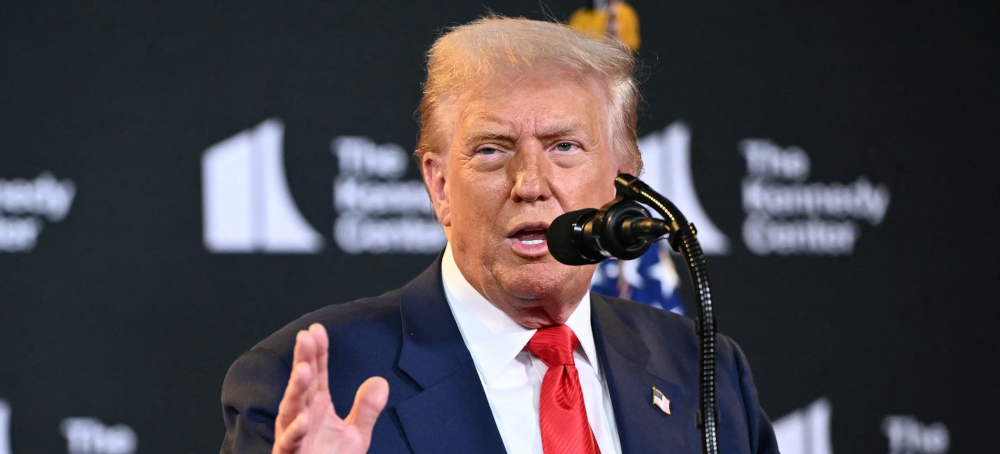 President Donald Trump takes a question from the press during a visit to the Kennedy Center in Washington, August 13, 2025. (photo: AFP)
14 August 25
Earlier this week, Trump announced his plans to deploy National Guard troops in the nation's capital, declaring a public safety emergency in order to put the Washington police department under federal control and station the National Guard on the city's streets. Trump's current control of the D.C. police force expires in 30 days, after which Congress would have to weigh in.
Asked Wednesday whether he'd work with Congress to extend the emergency authorization allowing him to temporarily seize control of local law enforcement, Trump said he'll ask Congress for a "long-term" extension of federal authority over the Washington police force.
"We're going to be asking for extensions on that -- long-term extensions, because you can't have 30 days," Trump said at an event at the Kennedy Center.
Trump indicated at one point that he'd ask Congress for more funds to fight crime and to make repairs to Washington's streets and parks.
"We're going to make Washington beautiful. We're going to redo roads. We're going to redo the medians. The pavers and the medians are all throughout the city. We're going to take all the graffiti off. We're going to have to remove the tents. And the people that are living in our parks, we're going to be redoing the parks, the grasses and all. We're going to be going to Congress for a relatively small amount of money. And [Senate Budget Committee chair and GOP Sen.] Lindsey [Graham] and the Republicans are going to be approving it," Trump said.
Trump has long threatened to take control of Washington, saying he wants to crack down on violent crime in the District although police statistics show that in the past two years, violent crime has gone down.
"Fighting crime is a good thing. We have to explain we're going to fight crime -- that's a good thing," Trump said Wednesday. "Already they're saying, 'He's a dictator,' he said, referring to Democrats. "The place is going to hell. We've got to stop it. So, instead of saying, 'He's a dictator,' they should say, 'We're going to join him and make Washington safe.'"
"We're going to be essentially crime-free. This is going to be a beacon, and it's going to also serve as an example of what can be done," Trump said.
National Guard troops began deploying in larger numbers along the National Mall overnight, according to a person familiar with the plan.
According to a person familiar with the effort, the latest plan calls for sending the activated Army soldiers to spots around the National Mall in the middle of the night so they will be visible to D.C. residents by Friday morning.
Officials said the Trump administration is still in the process of setting up a joint task force, which will be led by Army Col. Larry Doane. While the task force is expected to include 800 activated soldiers, D.C. residents won't see that many on the streets.
The troops will work in shifts of 100 to 200 troops at a time, and some of them will be assigned to administrative or logistical roles in support of local law enforcement, officials told ABC News.
ABC News producers did not see any National Guard or increased law enforcement presence around Washington Wednesday afternoon -- including around the National Mall, D.C. Armory or in Logan Circle where a man was gunned down and killed earlier this week.
A White House official told ABC News that, beginning Wednesday night, officials expected a "significantly higher National Guard presence to be on the ground throughout Washington, D.C." The White House official added that beginning Wednesday night, the deployment will transition to round-the-clock, 24/7 operations. Those operations had been previously focused on evening and overnight hours.
On Tuesday night, more than 1,450 federal law enforcement officers and National Guard members patrolled Washington, according to a White House official. Law enforcement teams made 43 arrests on Tuesday night -- nearly twice the number made Monday night, the official said.
Those law enforcement teams included 750 D.C. Metropolitan Police Department officers who were "uniformed, marked as patrol and directly assigned as anti-crime officers," the White House official said. That was in addition to the federal law enforcement who had been previously mobilized in the area. The White House official said that there were about 30 National Guard troops on the ground last night.
The law enforcement teams were "deployed throughout all seven districts in D.C. to promote public safety and arrest violent offenders," the White House official said.
After Trump's announcement Monday, approximately 850 officers and agents fanned out over D.C. right after Trump declared a crime emergency in the capital, making 23 arrests, White House press secretary Karoline Leavitt said Tuesday.
On Tuesday, National Guard troops were spotted on the National Mall, with many stationed around the base of the Washington Monument. The troops left Wednesday morning.
It was not immediately clear why the presence of U.S. troops along the National Mall was needed, other than to put Trump's orders on display. The area, marked by museums, monuments and long stretches of grass, is known as a relatively safe part of the city that attracts mostly tourists and school groups.
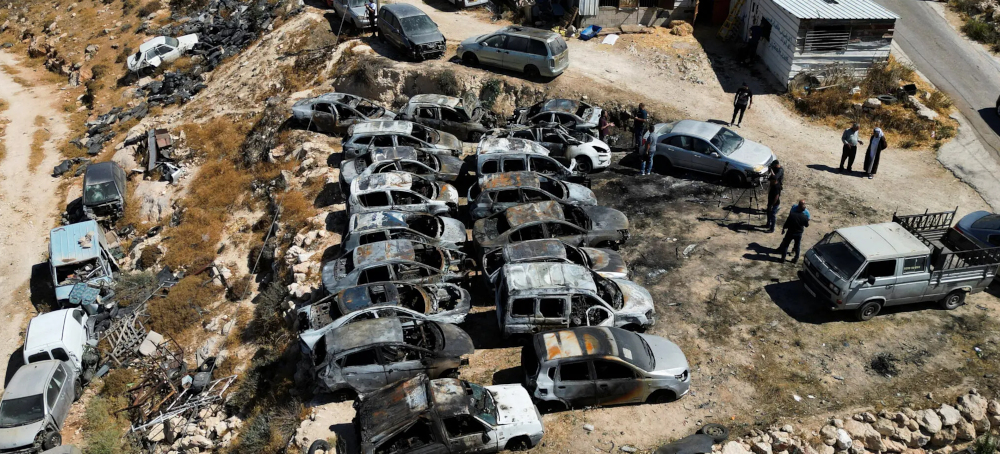 Burned out cars in Burqa, in the West Bank, last month. (photo: Reuters)
Extremists are carrying out one of the most violent campaigns against Palestinian villages since the U.N. began keeping records.
They sprayed liquid on several cars, security footage showed, and set the vehicles alight. One sprayed graffiti on a barn wall, tagging the name of a nearby settlement, as well as the Hebrew word for “Revenge.”
It was the third attack that July night in this central pocket of the Israeli-occupied West Bank, and the seventh attack on this particular junkyard since the start of the war in Gaza in October 2023, according to its owner.
“Before the war they harassed us, but not like this,” said Muhammad Sabr Asalaya, 56, the junkyard owner. “Now, they’re trying to expel as many people as they can and annex as much land as they can.”
Such attacks were on the rise before Hamas led a deadly raid on Israel in 2023, setting off the war in Gaza, and they have since become the new normal across much of the West Bank. With the world’s attention on Gaza, extremist settlers in the West Bank are carrying out one of the most violent and effective campaigns of intimidation and land grabbing since Israel occupied the territory during the Arab-Israeli war of 1967.
Settlers carried out more than 750 attacks on Palestinians and their property during the first half of this year, an average of nearly 130 assaults a month, according to records compiled by the United Nations Office for the Coordination of Humanitarian Affairs. That is the highest monthly average since the U.N. started compiling such records in 2006.
The Israeli military has recorded a similar surge in settler violence, though it has documented only 440 attacks in the same period, according to unpublished internal records reviewed by The New York Times. The military, which is the sovereign power in the occupied territory, says it tries to prevent the attacks, but a Times investigation last year found that the Israeli authorities have for decades failed to impose meaningful restraints on criminal settlers. While Israel usually prosecutes Palestinians under military law, settlers are typically charged under civil law, if they are prosecuted at all.
For this article, reporters for The Times visited five villages recently attacked by settlers, reviewed security footage of several episodes and cellphone footage of others, and spoke with residents of the afflicted villages, as well as Israeli military officers and settler leaders.
Our reporting found that masked settlers typically sneak into Palestinian villages in the dead of night, setting fire to vehicles and buildings. In some cases, they enter during the daylight hours, leading to confrontations with residents. Sometimes the clashes have involved the Israel military, leading to the killings of several Palestinians, including a Palestinian American. In one daytime attack, settlers threw a firebomb into a child’s bedroom, the child’s family said.
The vast majority of the 700,000 Jewish Israelis who have settled since 1967 in the West Bank and East Jerusalem — in settlements considered illegal by most of the international community — are not involved in such violence. Mainstream settler leaders say they have a right to the land but oppose attacking Palestinians.
Hard-line settler leaders acknowledge that their aim is to intimidate Palestinians into leaving strategic tracts of territory that many Palestinians hope may one day form the spine of a state.
“It’s not the nicest thing to evacuate a population,” Ariel Danino, a prominent settler activist, said in an interview with The Times in 2023. “But we’re talking about a war over the land, and this is what is done during times of war.” In a recent call, Mr. Danino said he stood by the comments but declined a second interview.
For several years, the settlers had focused their intimidation on tiny, seminomadic herding communities along a remote chain of hilltops northeast of Ramallah, the main Palestinian city in the West Bank. That campaign has largely succeeded, forcing at least 38 communities to leave their hamlets and encampments since 2023, according to records compiled by B’Tselem, an Israeli rights group.
That has eroded the Palestinian presence there and ceded the surrounding slopes to settlers who have seized the chance to build more small settlement outposts, or encampments.
After members of one Palestinian community fled en masse in May, a settler leader, Elisha Yered, wrote on social media that their departure was “thanks to the campaign waged against it by the Jewish settlement outposts in the area.”
“With God’s help, one day we will expel you to your natural place in Iraq and Saudi Arabia,” added Mr. Yered.
Since the start of 2023, settlers have built more than 130 outposts, mostly in rural areas of the West Bank, that are technically unauthorized but often tolerated by the Israeli government. That is more than they had built in the previous two decades combined, according to research by Peace Now, an Israeli group that backs the creation of a Palestinian state.
Now, settlers have expanded their scope. They are increasingly targeting a cluster of wealthier, larger and better connected Palestinian villages closer to Ramallah — villages like Burqa and its neighbor, Beitin.
Before the junkyard attack in Burqa, masked settlers had, in fact, begun to rampage in Beitin. Just after 1 a.m., Abdallah Abbas, a retired teacher in that village, woke to find his sedan on fire and a Star of David sprayed on the wall of his garden.
Roughly an hour later, security footage showed, two masked arsonists stole into the yard of Leila Jaraba’s house, a few hundred yards away on the edge of the village. One sprayed the hood of Ms. Jaraba’s car with something flammable, and his accomplice set the car on fire.
“We knew our turn would come,” said Ms. Jaraba, 28, who was cowering inside with her husband and two sons, ages 2 and 4 months. “They want to take this land; they want to kick us out.”
About an hour later, masked settlers entered Burqa and attacked Mr. Sabr Asalaya’s junkyard. Villagers said in interviews that they suspected the same group of settlers might have moved from place to place, wreaking havoc. This sequence of attacks was just a snapshot of a broader pattern of violence in the area.
In the first half of 2025, there were an average of 17 attacks a month in this approximately 40- square-mile area, according to the U.N. That was nearly twice the monthly rate in 2024, and roughly five times as many as in 2022.
The attacks have occurred against the backdrop of intensifying efforts by the Israeli government, which is partly led by longtime settler activists, to entrench its grip on the West Bank.
Since entering office in late 2022, Prime Minister Benjamin Netanyahu and his government have authorized more than 30 settlements, some of which were previously built without government permission and have been granted retroactive authorization. It is the largest wave of government-led settlement activity since before the Oslo peace process in the 1990s.
Simultaneously, the Israeli military has captured and demolished key urban neighborhoods in the northern West Bank that are technically administered by the Palestinian Authority, a semiautonomous institution that oversees civil governance in Palestinian cities. The military has also installed hundreds of roadblocks and checkpoints across the territory.
The Israeli military defends its actions as a means of containing Palestinian militant groups that launch terrorist attacks on Israelis. But it has further complicated the lives of most Palestinians in the West Bank, stifled the economy, left tens of thousands of people homeless and made it even harder for most Palestinians to journey to nearby cities.
In villages like Burqa, settlers’ attacks make life especially untenable. Repeated arson attacks have damaged scores of used cars that Mr. Sabr Asalaya, the junkyard owner, said he had bought from dealers in Israel. He planned to retool their engines and spare parts and sell them for a profit. The attacks have lost him stock worth tens of thousands of dollars, making his business — and his ability to survive in this village — much less viable, he said.
Life is “not slowly turning untenable — it is already untenable,” Mr. Sabr Asalaya said. “We are encircled. We can’t even herd our cattle. We’re locked in.”
The problem has been made worse by the Israeli military’s failure to prevent either the attacks or the settlers’ construction of unauthorized encampments across the territory. A Times investigation last year found that the Israeli authorities had for decades shown substantial leniency to Jews involved in terrorist attacks against Arabs, a dynamic that has only worsened since October 2023. In one emblematic case, a settler was filmed shooting a Palestinian in the presence of an Israeli soldier, yet the shooter was questioned for only 20 minutes and never arrested.
A senior Israeli military commander in the central West Bank, speaking on the condition of anonymity in line with military protocol, said his soldiers tried to protect both settlers and Palestinians in accordance with Israeli law. He noted that settlers had sometimes clashed with Israeli soldiers this summer.
We spoke to the commander eight hours before the attacks on Mr. Sabr Asalaya’s property and Ms. Jaraba’s car.
Soldiers arrived long after the fires had been extinguished, villagers said. While the Israeli police said they had opened investigations into each episode, no one was prosecuted.
“In some cases, suspects were arrested,” the police said in a statement, “though later released due to a lack of evidence.”
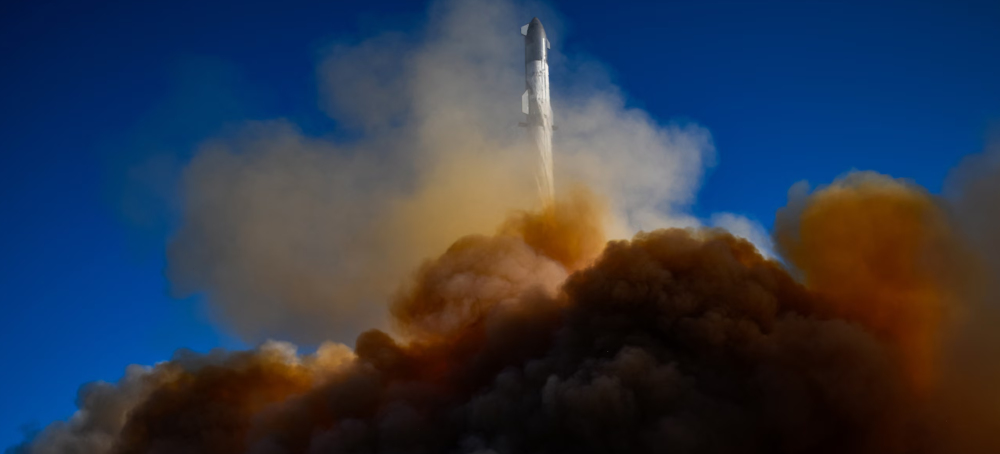 SpaceX starship lifts off from Starbase in Boca Chica, Texas, for its sixth flight test on 19 November 2024. (photo: AFP)
US president is pushing an ‘end run around’ on safeguards, risking harm to wildlife, air and water, attorney says
But its central components may be illegal and the US president “is trying to do an end run around” the law, said Jared Margolis, an attorney with the Center for Biological Diversity, which has litigated environmental issues around launches.
If successfully implemented, the launches could create an environmental disaster, advocates say. Rocket launches create a huge amount of pollution that can contaminate local waterways and air with high levels of mercury, Pfas, particulate matter and other highly toxic substances. The vibration, sound waves, heat and explosions damage habitat and kill wildlife, some of which are protected by the Endangered Species Act.
The executive order directs the US transportation department to “use all available authorities to eliminate or expedite” environmental reviews. Among the few protections during space launches is the National Environmental Policy Act (Nepa) review that considers a wide range of impacts on the environment and human health, and the Coastal Zone Management Act, a federal law that allows states to decide how coastlines are used.
The order targets both, and suggests the agency could attempt to circumvent the Endangered Species Act.
“The order is directing the transportation department to do whatever they can to avoid Nepa, but it doesn’t mean that’s possible, or that they have the authority to do so,” Margolis said.
The executive order comes at a time when commercial space activity is spiking. Musk’s SpaceX, the largest space company, did 96 launches in 2023, and is targeting 180 this year. That number is expected to continue growing, while other players, like Bezos’s Blue Horizon, are quickly increasing launch rates.
The US federal government’s environmental oversight of the launches has always been weak, public health advocates say. The Trump administration quickly hobbled several of the few regulatory mechanisms that existed, and recently gutted funding for research into stratospheric pollution largely caused by Musk’s SpaceX.
“We’re accelerating the number of launches and blinding ourselves to the follow-up effects that they have on the environment – that spells disaster,” said a space industry employee who does work around Nepa issues, but requested anonymity to talk about the order without retribution.
Space companies must obtain a launch permit from the Federal Aviation Administration (FAA), which does a Nepa review as part of the process. The reviews are the framework by which federal agencies should assess a project’s environmental or human health risks.
They take into consideration air pollution, endangered species harms, water pollution, wildfire risk, noise pollution and potential human health risks, among other issues.
The FAA has faced criticism from space companies for taking too long to review launch permits – about five months – while environmental groups have lambasted the agency for not using Nepa reviews to require more protections at launch sites.
The executive order in part directs the department to classify the launches as “categorical exclusions”, which is the legal term for minor changes to a site that do not require a Nepa environmental review. Among other categorical exclusions are landscaping or lighting alterations.
Legal experts who reviewed the order questioned the legality of the claim that a rocket launch has similar environmental impacts to landscaping changes.
The plan “fits with their overall desire to eliminate environmental considerations and reviews”, said Dan Farber, an environmental law attorney with the University of California, Berkeley.
“Clearly what Trump wants to do is bulldoze through all this procedural stuff,” Farber added.
However, there is a more legally plausible route. The Commercial Space Launch Act does include a provision that allows the transportation secretary to attempt to exempt requirements of environmental law if it is determined that the law is not necessary to protect the “public health and the safety of property”, Margolis said. That would be accomplished through a legal rulemaking process.
But the provision is in conflict with Nepa, which applies to any federal action that has significant environmental impact, Margolis said.
“We would argue that review is necessary to protect public health and safety, and Nepa applies,” he added.
The Nepa reviews provide a valuable legal avenue for challenges to the worst abuses, and Margolis said the order seems to be a response to arguments he made in which the Center for Biological Diversity sued several federal agencies and SpaceX over launches from the Boca Chica, Texas launch site on the Gulf of Mexico.
The site sits next to a sensitive habitat for protected species, like the Kemp’s ridley sea turtle, which is on the brink of extinction. SpaceX has launched the largest rockets ever made from the site, and several of those exploded, raining down particulate matter, metal and concrete across the region. The debris caused brush fires and covered homes six miles away in dust.
Sound waves from launches have been known to kill birds and other animals, and SpaceX has been cited by state environmental regulators in Texas for spitting wastewater highly contaminated with mercury into adjacent waters.
Still, the FAA has done little to mitigate the damage to the environment, and claimed the issues did not warrant an in-depth review. Margolis said SpaceX, with the FAA’s blessing, had turned the ecologically sensitive area into a “sacrifice zone”, and the litigation is ongoing.
The order also seems designed to aid Musk in his fight with California state regulators who have so far stopped SpaceX from expanding the number of launches along the coastline, in part using their authority under the Coastal Zone Management Act. Trump’s order would give federal authorities more power to intervene, and restrict state agencies’ decision-making powers.
Margolis said this part of the order was also illegal because Trump was again attempting to change the law by decree.
“It’s a talking point to show he’s supporting industry, but at the end of the day it’s not something that can happen the way he says it can happen,” Margolis said.


No comments:
Post a Comment
Note: Only a member of this blog may post a comment.