Friday, December 26, 2025
■ Today's Top News
"Seems like the Armed Services committees ought to do some oversight regarding the expensive and pointless Christmas fireworks display in Nigeria," said one legal expert.
By Jessica Corbett
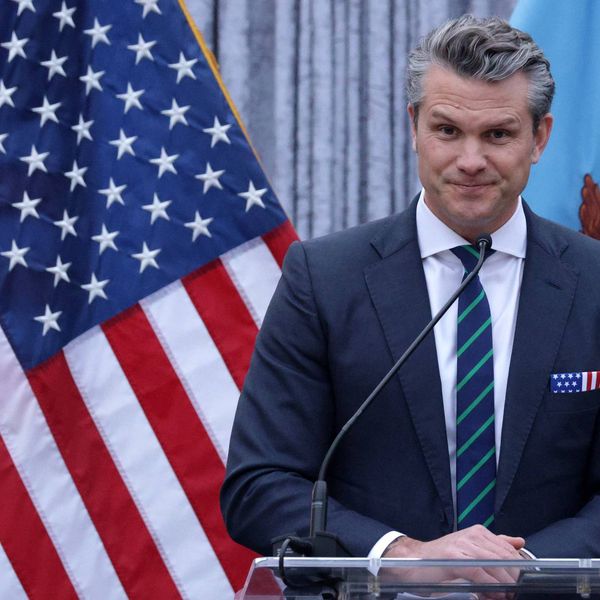
After the Trump administration bombed alleged Islamic State targets in Nigeria on Christmas Day, Gen. Dagvin Anderson of US Africa Command claimed that “our goal is to protect Americans and disrupt violent extremist organizations wherever they are,” and Defense Secretary Pete Hegseth warned of “more to come,” while critics advocated against any more American violence.
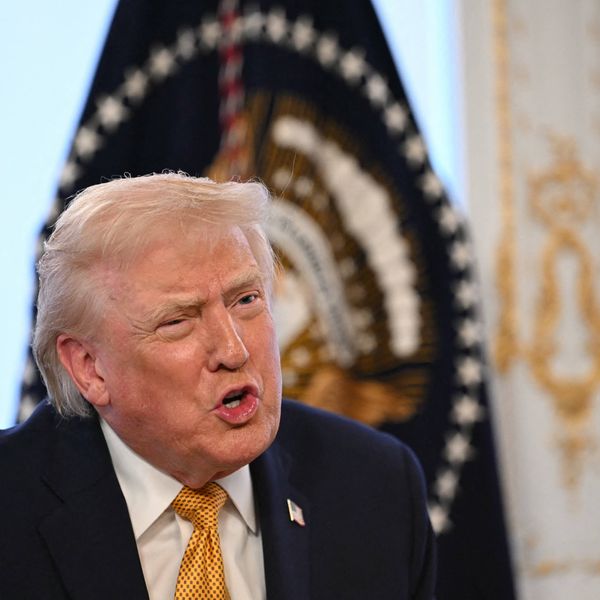
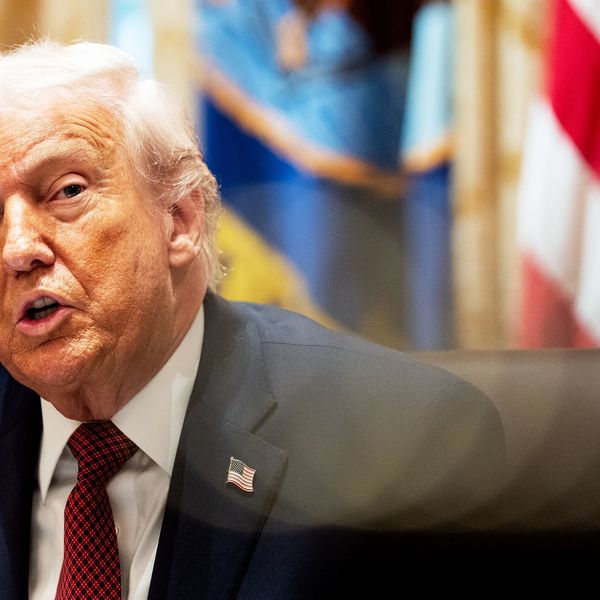
President Donald Trump said Thursday that he launched a “powerful and deadly strike against ISIS Terrorist Scum in Northwest Nigeria, who have been targeting and viciously killing, primarily, innocent Christians, at levels not seen for many years, and even Centuries!”
Specifically, according to the New York Times, which spoke with an unnamed US military source, “the strike involved more than a dozen Tomahawk cruise missiles fired off a Navy ship in the Gulf of Guinea, hitting insurgents in two ISIS camps in northwest Nigeria’s Sokoto State.”
The Nigerian Ministry of Foreign Affairs acknowledged cooperation with the United States that “includes the exchange of intelligence, strategic coordination, and other forms of support.”
However, Nigerian Foreign Minister Yusuf Maitama Tuggar also countered the Trump administration’s framing of the airstrikes as part of a battle against a “Christian genocide.”
The minister stressed during a Friday appearance on CNN that “terrorism in Nigeria is not a religious conflict; it is a regional security threat.”
The Associated Press spoke with residents of Jabo, a village in Sokoto, about the confusion and panic spurred by the strikes:
They... said the village had never been attacked by armed gangs as part of the violence the US says is widespread, though such attacks regularly occur in neighboring villages.
“As it approached our area, the heat became intense,” recalled Abubakar Sani, who lives just a few houses from the scene of the explosion.
“Our rooms began to shake, and then fire broke out,” he told AP. “The Nigerian government should take appropriate measures to protect us as citizens. We have never experienced anything like this before.”
Jennifer Kavanagh, director of military analysis at Defense Priorities, a US think tank that that promotes restraint, and diplomacy, said in a statement that “the US action taken in Nigeria while Americans celebrated the Christmas holiday is an unnecessary and unjustified use of US military force that violates Mr. Trump’s promises to his supporters to put American interests first and avoid risky and wasteful military campaigns abroad.”
As Common Dreams reported after the strikes, despite dubbing himself the “most anti-war president in history” and even seeking a Nobel Peace Prize, Trump has now bombed not only Nigeria but also Afghanistan, Iran, Iraq, Libya, Pakistan, Somalia, Syria, and Yemen, plus alleged drug trafficking boats in the Caribbean Sea and Pacific Ocean, since the start of his first term in 2017.
“Airstrikes in Nigeria will not make Americans safer, no matter the target,” Kavanagh argued. “There are no real US interests at stake in Nigeria, a country that is an ocean and over 5,000 miles away. The country is home to a long-running insurgency, but violence and unrest in Nigeria pose no threat to the US homeland or national security interests abroad. Furthermore, despite Mr. Trump’s claims, there is no evidence that Christians are targeted by Nigeria’s extremist groups at a rate higher than any other religious or ethnic group in the country. Killings of civilians, to the extent they occur, are indiscriminate.”
As CNN reported:
“Yes, these (extremist) groups have sadly killed many Christians. However, they have also massacred tens of thousands of Muslims,” said Bulama Bukarti, a Nigerian human rights advocate specializing in security and development.
He added that attacks in public spaces disproportionately harm Muslims, as these radical groups operate in predominantly Muslim states...
Out of more than 20,400 civilians killed in attacks between January 2020 and September 2025, 317 deaths were from attacks targeting Christians while 417 were from attacks targeting Muslims, according to crisis monitoring group Armed Conflict Location & Event Data.
Kavanagh noted that “the United States has been conducting strikes on ISIS and other terrorist group targets in Africa now for over two decades and the number and power of militant groups on the continent has only increased. The whack-a-mole strategy is ineffective at controlling insurgencies or eliminating terrorist groups. It also needlessly expends scarce US resources and does so at a time when Americans are concerned about economic challenges at home.”
“Chasing terrorist groups around the globe is the opposite of the ‘America First’ foreign policy voters expected when they returned Mr. Trump to the White House,” she added. “To keep his commitment, he must make the attack in Nigeria a one-off.”
Medea Benjamin of the anti-war group CodePink similarly says in a video shared on social media Friday: “We have to ask, is this Donald Trump’s idea of America First? The American people do not want to be dragged into yet another conflict, and this was done without congressional approval, without public debate, without any transparency.”
Former libertarian US Congressman Justin Amash (R-Mich.) has also emphasized in multiple social media posts since Thursday that “to carry out an offensive military action in another country, the approval the president of the United States needs is from the Congress of the United States, not from a foreign government.”
Brian Finucane, a senior adviser at the International Crisis Group and nonresident senior fellow at the New York University School of Law, suggested congressional action, saying that it “seems like the Armed Services committees ought to do some oversight regarding the expensive and pointless Christmas fireworks display in Nigeria.”
Meanwhile, progressive campaigner Melissa Byrne asked, “What kind of Christianity murders people on Christmas?”
"This decision means I can finally focus on my asylum case, not on the ICE officers who might be waiting for me outside the courtroom door,” said the plaintiff in the class action suit.
By Brett Wilkins
A US judge on Wednesday temporarily blocked two federal agencies from arresting noncitizens at immigration courthouses in the San Francisco area, a ruling hailed by migrant justice advocates amid ongoing legal challenges to the Trump administration’s policy.
US District Judge for the Northern District of California Casey Pitts granted a stay in Sequen v. Albarran blocking Immigration and Customs Enforcement and the Executive Office for Immigration Review (EOIR) from carrying out courthouse arrests within ICE’s San Francisco Area of Responsibility, pending the outcome of a broader legal challenge.
“Plaintiffs have established a likelihood that members of the courthouse-arrest class will suffer irreparable harm in the absence of a stay,” Pitts, an appointee of former President Joe Biden, wrote in his 38-page ruling. “ICE has arrested large numbers of noncitizens at immigration courthouses in northern California pursuant to the challenged courthouse arrest policies, and it avows that it will continue doing so.”
“This ruling is a critical step in ensuring that immigrants can safely pursue their immigration cases without fear of arrest.”
For decades, federal immigration authorities eschewed arrests at “sensitive locations,” including places of worship, hospitals, schools, and—during the Obama and Biden administrations—immigration courts. Trump began targeting courthouses during his first term.
“This circumstance presents noncitizens in removal proceedings with a Hobson’s choice between two irreparable harms,” Pitts wrote in his decision. “First, they may appear in immigration court and face likely arrest and detention... And for many class members whom ICE arrests under the challenged policies... such an arrest would likely violate their rights under the due process clause of the Fifth Amendment.”
“Alternatively, noncitizens may choose not to appear and instead to forego their opportunity to pursue their claims for asylum or other relief from removal,” Pitts wrote. “As the declarations of immigration attorneys and former immigration judges establish, dozens of noncitizens are already taking this path and receiving in absentia removal orders as a result.”
“Accordingly, if noncitizens wish to avoid the irreparable harm of arrest and detention, they must instead irrevocably give up their pursuit of potentially valid immigration claims and be ordered removed,” he noted. “There can be little question that this permanent loss of noncitizen’s opportunity to have their claims heard, and their resulting removal, is an irreparable injury.”
Pitts found that the class plaintiffs “are likely to succeed on the merits of their claims” that the Trump administration’s ICE and EOIR courthouse arrest policy is “arbitrary and capricious.”
Wednesday’s decision follows a November 25 preliminary injunction in the same case requiring ICE to remedy unconstitutionally unsafe conditions in temporary holding cells at the agency’s San Francisco field office.
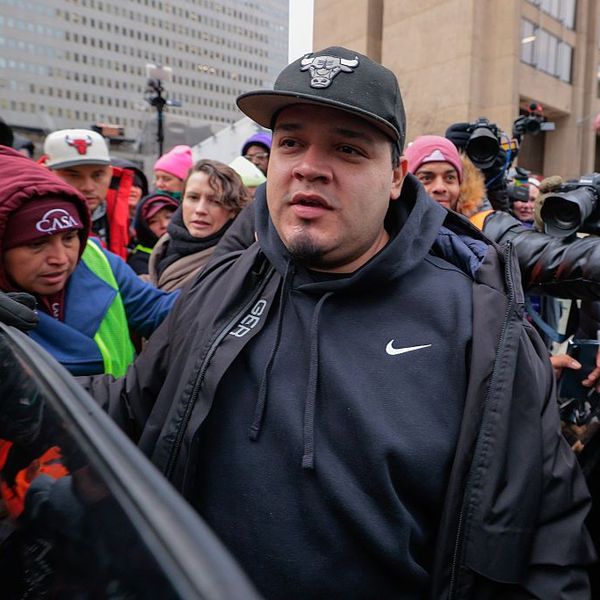
Responding to Wednesday’s ruling, class plaintiff Carmen Pablo Sequen said: “I fled persecution to seek safety, only to find myself arrested in the courthouse, the one place I was told to trust. The terror of that day has haunted me. This decision means I can finally focus on my asylum case, not on the ICE officers who might be waiting for me outside the courtroom door.”
Plaintiffs’ lawyer Jordan Wells, a senior staff attorney at the Lawyers’ Committee for Civil Rights of the San Francisco Bay Area, said in a statement that “the administration’s reckless policy is an affront to justice, designed to sabotage the immigration court system and force people to abandon their lawful claims.”
“This ruling is a critical step in ensuring that immigrants can safely pursue their immigration cases without fear of arrest,” Wells added.
Laura Sanchez, legal director at the Central American Resource Center of Northern California, said, “For our clients, who are asylum seekers, survivors of violence, parents fighting to stay with their children, this ruling begins to lift a cloud of terror.”
“They can now walk into court, not as targets, but as people lawfully pursuing their cases,” Sanchez added. “This stay is a profound affirmation of their humanity and their right to be heard.”
“This ruling begins to lift a cloud of terror.”
In a separate case, Pitts earlier this week issued a 67-page order in Garro Pinchi v. Noem blocking the Trump administration’s rearrest and redetention policy targeting noncitizens who had previously been released and later taken into custody after attending immigration court hearings or check-ins.
Other courts have ruled against the arrest of noncitizens at immigration courthouses, including in a 2019 preliminary injunction granted by District Court Judge Indira Talwani—an appointee of former President Barack Obama—blocking ICE “from civilly arresting parties, witnesses, and others attending Massachusetts courthouses on official business while they are going to, attending, or leaving the courthouse.”
A federal appellate court reversed Talwani’s preliminary injunction in the case, which did not result in any final judgment for or against ICE’s courthouse arrest policy, as plaintiffs voluntarily dismissed their lawsuit as moot after the Biden administration ended such apprehensions.
Earlier this month, US District Judge for the District of Columbia Beryl Howell—an Obama appointee—issued a ruling in Escobar Molina v. US Department of Homeland Security that preliminarily blocked warrantless civil immigration arrests by DHS officers in Washington, DC absent probable cause.
A group of Israeli military veterans called his punishment "just a slap on the wrist" and "state-backed impunity for state-backed terror."
By Stephen Prager
Israeli police have released a soldier from custody after he was filmed running his vehicle over a Palestinian man who was praying outside the city of Ramallah in the occupied West Bank.
A silent video of the incident, which both Israeli and Palestinian outlets reported on Thursday, shows an Israeli settler with a rifle slung over his back driving his all-terrain vehicle (ATV) toward a 23-year-old Palestinian man as he knelt in prayer on the roadside.
After barrelling over the man, the settler shouted something in his direction and backed up, then gestured for him to move.
The settler then turned his ATV around, got off, and shouted something at a Palestinian taxi driver. The injured Palestinian man then stood up, approaching the cab. The settler again shooed him off before hopping back on the ATV and speeding away.
Majdi Abu Mokho, the father of the Palestinian man, said his son now has pain in both legs after he was struck.
Mokho told Agence France-Presse: “The assailant is a known settler. He set up an outpost near the village, and with other settlers he comes to graze his livestock, blocks the road, and provokes the residents.”
He also said the settler blinded him with pepper spray after hitting his son, though this is not shown in the video.
The Israel Defense Forces (IDF) identified the driver as an Israeli reserve soldier with one of its regional defense units. These battalions have dramatically expanded in recent years with backing from Israel’s right-wing government, which contains many officials at the center of the settler movement.
Breaking the Silence, a group of Israeli military veterans critical of the occupation of Palestine, has referred to the regional defense units—which have been responsible for many other attacks on Palestinian civilians in the West Bank—as “no more than settler militias in uniform.”
The IDF said the soldier’s weapon has been confiscated and that he’s been suspended due to the “severity of the incident,” which the IDF said it was investigating. The IDF has not released the soldier’s name.
An initial probe found that the same settler had opened fire in the village of Deir Jarir, north of Ramallah, earlier that same day, in an incident that resulted in a young Palestinian man being injured by gunfire.
During that altercation, which was also caught on film, a group of masked settlers was seen hurling rocks at the village’s entrance. According to Palestinian sources who spoke with the Israeli newspaper Haaretz, the targets of the attack were villagers who were grazing their cattle near their homes.
In another video, a masked man—who the IDF identified as the same reservist responsible for the ATV attack—is seen firing his weapon in the direction of the camera. The IDF said that by opening fire inside the village while in civilian clothes, the soldier had committed a “serious breach of his authority.”
According to the Times of Israel, Israeli police released the settler reservist from custody on Friday. He has been placed under house arrest for five days and is banned from approaching Deir Jarir, where the incident occurred, or from contacting anyone else connected with the case.
The violent incident is the latest in a year that has seen a record number of attacks by Israeli settlers and soldiers against Palestinian villagers.
According to official figures, Israeli forces and illegal settlers have killed at least 1,130 Palestinians in the occupied West Bank, injured nearly 11,000, and detained around 21,000, since October 2023, when Israel launched its two-year genocide in Gaza following Hamas’ attack.
On the same day as the ATV attack, Israeli police announced that they had arrested five Israeli settlers over their alleged involvement in an ambush against a Palestinian home, which resulted in “moderate injuries to the face and head” of an eight-month-old Palestinian girl, according to the Palestinian news agency WAFA.
While the IDF says it is investigating the ATV attack along with local police, attacks by Israeli settlers are often treated with leniency.
In January 2025, the Israeli watchdog group Yesh Din reported that across more than 1,700 reports of religious or politically motivated hate crimes committed by Israelis against Palestinians in the West Bank over the past two decades, nearly 94% of them were closed without any indictment being filed, and only 3% resulted in a conviction.
Although there has been a documented rise in killings by Israeli settlers since October 2023, not a single one of those cases has resulted in an indictment, and only about a quarter have resulted in investigations by Israeli authorities.
Critics found the punishment of the reservist to be similarly lackluster and the latest example of settlers’ immunity from justice.
“Israeli reserve soldier intentionally runs over Palestinian praying on the side of the road,” said Rabbi David Mivasair, an activist with the Canadian group Independent Jewish Voices. “His punishment: his weapon was taken away, and he was suspended from the reserves... nothing more.”
Breaking the Silence called the punishment “just a slap on the wrist” and “state-backed impunity for state-backed terror.”
Others noted that nearly 8,000 Palestinians are currently being held in Israeli prisons indefinitely without trial, including in Israel’s “administrative detention” system, which allows them to be confined based on secret evidence that they and their lawyers cannot see.
Israel has justified it as a measure to prevent terrorism. However, in January, the government banned Israeli settlers from being held under those same administrative detention orders, with Defense Minister Israel Katz saying the goal was “to convey a clear message of strengthening and encouraging the settlements.”
Ihab Hassan, a Palestinian human rights activist, said of the ATV attack: “Had the victim been Israeli and the attacker Palestinian, the sentence would be life in prison. That is why it is called apartheid.”
Following the attack, the Council on American-Islamic Relations (CAIR) reiterated its calls for the US Congress to stop sending military aid to the Israeli government.
“This shocking and dehumanizing act is yet another example of the unchecked violence and abuse Palestinians face daily under Israel’s illegal occupation,” the group said. “Brazenly running over a man while he prays is enabled by a system that grants near-total impunity to illegal settlers. The Trump administration must end its silence and take concrete steps to hold the Israeli government accountable for these ongoing human rights abuses.”
"Trump’s new antitrust enforcers have demonstrated a willingness to facilitate dealmaking through an uptick in early terminations and settlements," said the American Economic Liberties Project.
By Brad Reed
Global corporate mergers surged to near-record highs in 2025, driven in part by US President Donald Trump’s lax approach to antitrust enforcement.
The Financial Times reported on Friday that global dealmaking in 2025 topped $4 trillion, including 68 mergers worth $10 billion or more, highlighted by Netflix’s $72 billion bid to buy Warner Bros. Discovery and a proposed $85 billion mega-merger between railway giants Union Pacific and Norfolk Southern.
The US alone accounted for $2.3 trillion worth of mergers and acquisitions, which the Financial Times said highlighted the Trump administration’s role in green-lighting corporate consolidation.
“Top dealmakers said that the Trump administration’s push to loosen regulation had encouraged companies to explore tie-ups that they might otherwise have been hesitant to pursue,” the Financial Times explained.
Andrew Nussbaum, co-chair of the executive committee at law firm Wachtell, Lipton, Rosen & Katz, told the Financial Times that corporate leaders “see a willingness of the regulators to engage in constructive dialogue” under the second Trump administration, which has given them “a willingness to take on regulatory risk for transactions that are strategic.”
The American Economic Liberties Project has also taken note of the Trump administration’s role in shepherding through big mergers, and created a Trump Merger Boom tracker earlier this year to document the massive wave of corporate consolidation.
In its analysis of the administration’s lax approach to antitrust enforcement, the American Economic Liberties Project said that “Trump’s new antitrust enforcers have demonstrated a willingness to facilitate dealmaking through an uptick in early terminations and settlements.”
“Despite pro-enforcement rhetoric early on from Trump’s heads of the FTC and DOJ Antitrust Division,” the American Economic Liberties Project added, “it’s becoming increasingly clear that agency leadership is having trouble making their decisions in a vacuum—with a quiet tide of deals granted to companies that have been friendly to the White House.”
Khan and members of her team are reportedly "dusting off a little-used 1960s price-gouging statute" in an effort to bolster the mayor-elect's affordability push in New York City.
By Jake Johnson
Former Federal Trade Commission chair and antitrust trailblazer Lina Khan is reportedly poring over New York City’s laws to help Democratic Mayor-elect Zohran Mamdani fulfill the central promise of his campaign: making the metropolis more affordable.
According to the New York Times, Khan—in her capacity as co-chair of the mayor-elect’s transition team—“has spent weeks scouring New York City’s laws to find dormant or underused mayoral authority that could allow Mr. Mamdani to take action in a hurry.”
Potential actions “include specific attempts to drive down apartment rental fees and utility costs and compel businesses to be more transparent about pricing,” as well as “dusting off a little-used 1960s price-gouging statute and policing new protections for food delivery workers,” the Times reported, citing three unnamed people familiar with internal discussions.
As head of the FTC under former President Joe Biden, Khan took groundbreaking legal action against major corporations such as Amazon and, in the words of one antitrust advocacy group, “reinvigorated enforcement of the Robinson-Patman Act, a long-dormant law designed to prevent price discrimination by big corporations, through two separate cases against PepsiCo and Southern Glazer’s—major victories for smaller and independent businesses.”
Khan, according to the Times, hopes to spur similar action in New York City. Members of her team, which includes former federal regulators, have “studied a 1969 consumer protection law meant to prohibit ‘unconscionable’ business tactics, to potentially target hospitals and sports stadiums where consumers typically have little choice but to pay high prices for products that are cheaper elsewhere.”
Additionally, the newspaper reported, “they have looked at whether food delivery companies, which wield significant power in the city, are complying with laws that protect their drivers, and whether landlords are complying with a newly enacted law barring many real estate brokers from collecting thousands of dollars in fees.”
Douglas Farrar, a spokesman for Khan, told the Times that the former FTC chair and her team have “worked closely” with the Mamdani transition “to provide key research support on ideas for hitting the ground running.”
The Washington Post editorial predictably ignores research showing that a single-payer system would save hundreds of billions of dollars—and tens of thousands of lives—each year.
By Jake Johnson
An editorial published on Christmas by the Jeff Bezos-owned Washington Post inveighed against supporters of Medicare for All in the United States, pointing to the struggles of Britain’s chronically underfunded National Health Service as a “cautionary tale” while ignoring research showing that a single-payer system would save the US hundreds of billions of dollars and tens of thousands of lives each year.
The editorial, headlined “Socialized medicine can’t survive the winter,” laments the “religious-like devotion to the NHS” in the United Kingdom even as “hospital corridors overflow and routine procedures get canceled due to a catastrophic event commonly known as ‘winter.’”
The Post editorial board, led by opinion editor Adam O’Neal, waves away expert analyses showing that the UK government is underinvesting in its healthcare system relative to other countries in Europe, resulting in the kinds of problems the Thursday editorial attributed to the supposedly inherent flaws of single-payer systems.
“This is the dark reality of single-payer and a cautionary tale for the third of Americans who mistakenly believe Medicare for All is a good idea,” the editorial declared ominously.
The editorial understates Medicare for All’s popularity among US voters. A recent Data for Progress survey found that even after hearing common opposing arguments, 58% of voters strongly or somewhat support improving Medicare and expanding it to cover everyone in the US.
A separate poll conducted by GQR Research found that 54% of voters nationally, and 56% in battleground districts, support Medicare for All. US Rep. Pramila Jayapal (D-Wash.), the co-leader of the Medicare for All Act in the House, is reportedly planning to present those findings to colleagues next month as she pushes Democrats to rally behind her legislation ahead of the critical midterm elections.
The renewed push for Medicare for All comes as the corporate-dominated healthcare status quo hits Americans with massive premium hikes stemming from congressional Republicans’ refusal to extend Affordable Care Act tax credits.
Predictably, the Post‘s editorial board—which Bezos has instructed to write “every day in support and defense of two pillars: personal liberties and free markets”—neglected to mention the myriad horrors of the United States’ for-profit system in its diatribe against Medicare for All.
The editorial also ignores research showing potentially massive benefits from a transition to Medicare for All, which would virtually eliminate private insurance while providing comprehensive coverage to everyone in the US for free at the point of service.
One study published in The Lancet estimated that a Medicare for All system would save more than 68,000 lives and over $450 billion in healthcare expenditures annually.
An analysis by Yale researchers calculated that “if the US had had a single-payer universal healthcare system in 2020”—which marked the onset of the Covid-19 pandemic—“nearly 212,000 American lives would have been saved that year” and “the country would have saved $105 billion in Covid-19 hospitalization expenses alone.”