Wednesday, April 8, 2026
■ Today's Top News
A foreign policy expert told Common Dreams that Israel’s unprecedented attack on Lebanon, backed by the US, “appeared to be a direct attempt to blow up the ceasefire, and it worked.”
By Stephen Prager
A Pakistani official said Wednesday that despite Israel’s unprecedented attack on Lebanon, it is still part of the ceasefire agreement that Pakistan’s prime minister helped to mediate the previous day, even as Israel and the US insist otherwise.
Pakistani Prime Minister Shehbaz Sharif, who played a key role in brokering the deal announced on Tuesday, said that “Iran and the United States of America, along with their allies, have agreed to an immediate ceasefire everywhere, including Lebanon and elsewhere, EFFECTIVE IMMEDIATELY.”
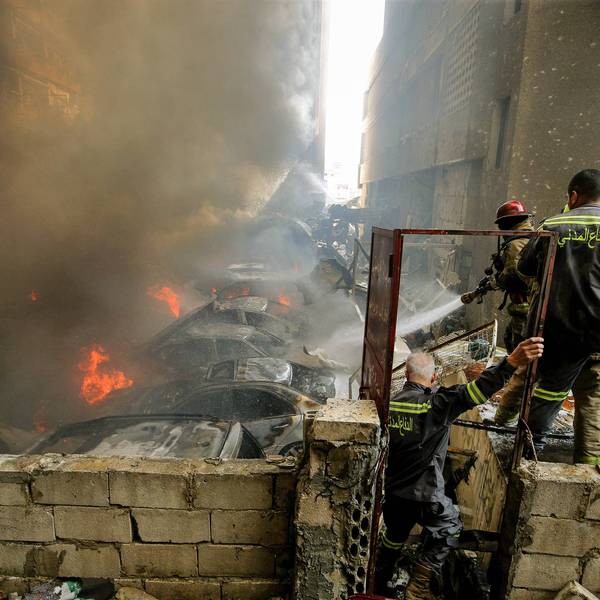
But within hours of the agreement, Israel launched what it said was its largest military operation against Lebanon yet, which killed at least 254 people and wounded 1,165 others, according to the Lebanese Health Ministry. The Israel Defense Forces acknowledged that the assault included attacks on many civilian areas.
Contrary to the mediators, Israeli Prime Minister Benjamin Netanyahu declared that the ceasefire “does not include Lebanon.” White House Press Secretary Karoline Leavitt followed suit, confirming that the US’s position was also that “Lebanon is not part of the ceasefire,” adding that “that has been relayed to all parties involved.”
But Pakistan’s ambassador to the US, Rizwan Saeed Sheikh, said on Wednesday afternoon that this was not the agreement the parties reached on Tuesday.
He told CNN anchor Becky Anderson that the deal announced by his prime minister, which included Lebanon, “could not have been more authentic” to what the two parties agreed to, and that it was still the prime minister’s understanding that Lebanon was included.
He added that this was another instance in which a ceasefire “could be disrupted” by Israel’s actions. He also noted that “there have been instances in the past where ceasefires have been disrupted,” a possible reference to Israel’s routine violations of its previous ceasefire with Lebanon and the current one with Gaza, and its repeated assassinations of Iranian negotiators as they’ve sat down for talks with the US.
The US-Iran ceasefire is less than 24 hours old, but Israel’s attack on Wednesday has already thrown it into peril. Iran responded to the attacks on Wednesday by once again closing the Strait of Hormuz after briefly reopening the critical waterway in accordance with the deal. Iran is also reportedly considering withdrawing from the ceasefire altogether and resuming strikes against Israel.
President Donald Trump has appeared eager to declare victory and move on from the war, which has further tanked his already plummeting support at home and sparked a global economic crisis.
But Janet Abou-Elias, a researcher with the Democratizing Foreign Policy program at the Quincy Institute for Responsible Statecraft, told Common Dreams that Israel’s goals are very different.
She explained that Israel was largely sidelined from the talks that culminated in Tuesday’s ceasefire and that within Israel’s internal politics, the agreement is being portrayed as “catastrophic.”
She noted that Yair Lapid, the leader of the opposition to Netanyahu’s government, has portrayed it as “the worst political failure in our history,” and accused the prime minister of failing to achieve his goals.
“What we’ve seen since looks like Israel acting to undermine a diplomatic process over which it had lost influence,” Abou-Elias said.
She said that Israel’s attack on Lebanon on Wednesday, which it has referred to as Operation Eternal Darkness, “appeared to be a direct attempt to blow up the ceasefire, and it worked.”
According to the Human Rights Activists News Agency, a US-based human rights monitor for Iran, at least 1,701 civilians have been killed in US-Israeli attacks against Iran since the war was launched on February 28.
After Wednesday’s bombardment, Lebanon’s Health Ministry reported that the death toll in the country was now up to at least 1,739 since the war began on March 2.
“At this point, any durable end to this conflict, even a temporary one, requires Washington to rein in Israel,” Abou-Elias said. “Trump has the leverage to do it. What’s unclear is whether he has the political will to use it.”
"No family should have to worry about putting food on the table, but congressional Republicans have made sure that millions will," said one critic of the GOP's budget law.
By Brad Reed
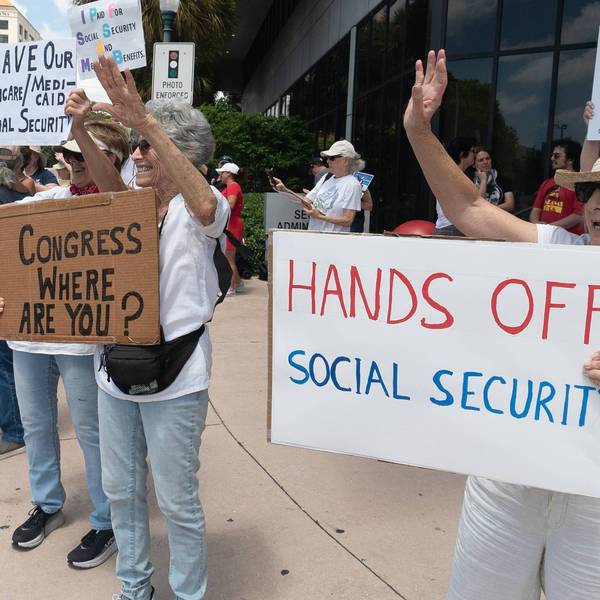
An analysis published Wednesday by the Center for Budget and Policy Priorities found that millions of low-income Americans have stopped participating in the Supplemental Nutrition Assistance Program ever since President Donald Trump signed the One Big Beautiful Bill Act into law last year.
According to CBPP’s analysis, SNAP participation declined by 6% between July 2025 and December 2025, with 2.5 million fewer Americans receiving benefits.
CBPP estimated that millions more will be dropped from SNAP benefits in the coming months as states adjust their budgets to remain in compliance with the law.
“Starting in 2027, most states will have to pay between 5% and 15% of SNAP benefit costs, totaling hundreds of millions of dollars a year in many states,” explained CBPP. “The magnitude of the cost shift... may incentivize states to take drastic measures to reduce their payment error rates quickly and cut program costs, even if it means delaying or improperly denying benefits to eligible people.”
In total, concluded CBPP, “we estimate that 4 million people in a typical month will lose out” on SNAP benefits “once the changes are fully implemented.”
CBPP published a separate analysis focusing specifically on Arizona, where SNAP participation has already fallen “far more than anticipated,” while warning that other states could soon see similarly steep participation drops as they rush to comply with the law.
The GOP budget law contained roughly $186 billion in cuts to SNAP over the span of a decade, which came from expanding work requirements, shifting some of the cost of the program to the states, and restricting benefit increases. As a result, millions of Americans became vulnerable to losing their benefits.
Leor Tal, campaign director at Unrig Our Economy, pointed to CBPP’s analysis as an example of the GOP waging class warfare on behalf of rich donors.
“SNAP is a lifeline for working Americans nationwide,” Tal said. “Now, that lifeline is being ripped away from millions because Republicans in Congress decided that giving tax breaks to billionaires and waging war are more important than protecting food for families. No family should have to worry about putting food on the table, but congressional Republicans have made sure that millions will.”
"A foreign country that a majority of Americans now disapprove of gets $3.8 billion a year from them."
By Julia Conley
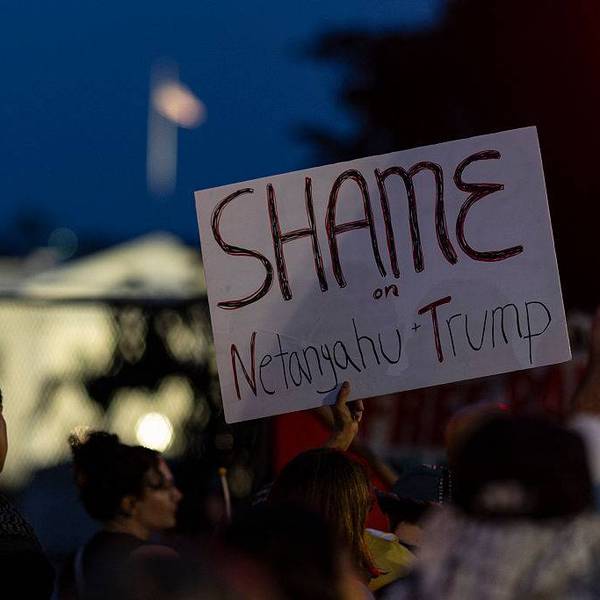
The bipartisan support Israel and its powerful lobby have enjoyed for decades in the US—with lawmakers from both parties insisting the federal government must help Israel “defend itself” with nearly $4 billion per year in military aid—is likely to shift considerably in the coming years as public support for the country continues to collapse, particularly among young voters, in the latest Pew Research poll.
The survey was taken last month as the US-Israeli war on Iran, which Israeli Prime Minister Benjamin Netanyahu reportedly pitched to President Donald Trump in an unusual Situation Room meeting in February, was escalating and spreading across the Middle East. It found that overall, 60% of US adults had an unfavorable view of Israel.
That share has grown considerably since 2022, before Israel began its US-backed war on the population of Gaza in retaliation for a Hamas-led attack. That year, just 42% in the US viewed Israel unfavorably.
Public opposition to the country’s government has also gone up by seven percentage points since last year, according to Pew. The share of adults who describe themselves as having a “very unfavorable” view of Israel has gone up by 9% since 2025 and has nearly tripled since before Israel began waging war on Gaza.
Journalist Prem Thakker commented that it was “absurd” to continue providing a country that a sizable majority of Americans disapprove of with military funding.
Over the past two-and-a-half years—as US public support for Israel has steadily declined—that funding has helped Israel to kill more than 72,000 Palestinians; injure more than 172,000; displace more than 90% of Gaza’s population; carry out nearly 800 attacks on the healthcare system, damaging 94% of hospitals; damage or destroy 97% of school buildings; and impose a mass starvation policy through a blockade on humanitarian aid. Israeli officials have publicly called for the killing of 50 Palestinians for every Israeli killed in the Hamas-led October 7, 2023 attacks, for Gaza to be burned to the ground, and for Israelis to “remember what Amalek has done to you,” a reference to the Israelites’ enemies in the Old Testament, whom King Saul was ordered to massacre.
All the while, Israeli officials and bipartisan US lawmakers who continue to support the Israeli government—and take donations from the American Israel Public Affairs Committee and other influential pro-Israel lobbying groups—have accused Americans who have spoken out against Israel’s genocidal attacks on Gaza of being antisemitic.
In the poll released by Pew, the shift away from support for Israel is most pronounced among voters aged 18-49, with 70% of respondents in that age bracket reporting unfavorable views. Majorities of both Democrats (84%) and Republicans (57%) under 50 had unfavorable views. In 2025, just 50% of Republicans under 50 viewed Israel negatively, while 71% of young Democrats said the same—representing a 13-point jump in just a year among the latter group.
Americans’ views on Netanyahu have also grown more negative, with 59% of respondents saying they did not trust the prime minister to do the right thing in terms of world affairs—up from 53% last year.
The poll was released as Israel continued its assault on Lebanon, which it began attacking in March after Hezbollah retaliated against Israeli forces for the US-Israeli killing of Iran’s Ayatollah Ali Khamenei. Israeli officials claim the two-week ceasefire reached between the US, Israel, and Iran does not include Lebanon, despite statements from Pakistan, which helped broker the deal declaring otherwise.
Israel has killed more than 1,400 people in Lebanon in the last month, in addition to striking Iran along with the US in attacks that have killed more than 2,000 people.
The Pew survey was released days after a poll by the IMEU Policy Project and Data for Progress found that among Democratic primary voters in Texas, the US relationship with Israel was not seen as an abstract foreign policy issue, but one that significantly impacted how many chose between US Senate candidate James Talarico and his primary opponent, US Rep. Jasmine Crockett (D-Texas).
The poll found that Talarico gained a 4-to-1 advantage over Crockett when he spoke out against providing US weapons to Israel. Nearly 90% of respondents agreed with his stance, and 44% of his supporters said his position deeply influenced their vote.
“Democrats,” said political operative Isi Baehr-Breen in response to the poll of Talarico supporters, “are gonna have to choose between Israel and winning elections.”
One senior Iranian official said his country is considering resuming strikes to put Israel's "aggressor regime in its place," while others warned Iran might quit the shaky ceasefire altogether.
By Brett Wilkins
Iran said Wednesday that it is blocking shipping through the Strait of Hormuz over Israel’s escalating bombardment of Lebanon, actions that are threatening to unravel the tenuous ceasefire agreed to less than a day ago.
Fars, an Iranian state media outlet, reported that “simultaneous with Israel’s attacks on Lebanon, the passage of oil tankers through the Strait of Hormuz has been stopped,” while Reuters said that “more than 180 tankers believed to be inside [the] strait, with hundreds more waiting” for access.
The developments came after two tankers were reportedly allowed to pass through the vital waterway—through which around 20% of the world’s oil is shipped—in the wake of Tuesday’s ceasefire agreement between the United States, Israel, and Iran.
While Israel accepted the two-week truce, it insists that the agreement does not apply to its ongoing war on Hezbollah in Lebanon. Iran counters that halting attacks on Lebanon is one of the 10 points in the Pakistan-brokered deal, which Israel is violating.
Over the past 24 hours, Israeli forces have ramped up their already intense bombing of Lebanon to levels described as “apocalyptic.” Lebanon’s Health Ministry said at least 254 people have been killed and 1,165 others wounded by Israel Defense Forces (IDF) bombing throughout the country, with some official sources telling media outlets that as many as 300 people have been killed.
More than 100 sites across Lebanon were reportedly bombed within a period of just minutes, including densely populated urban areas. In southern Lebanon, the dead include 12 medics, according to officials cited by Reuters.
Israeli forces have targeted civilian structures including apartment towers, claiming without providing evidence they were being used by Hezebollah.
Lebanese Prime Minister Nawaf Salam on Wednesday implored sympathetic nations to put pressure on Israel to stop the bombing.
“All of Lebanon’s friends are called upon to help us stop these attacks by all available means,” he said.
Iran’s Press TV reported Wednesday that Iranian leaders are considering resuming full-scale counterattacks in response to Israel’s escalation. According to the outlet, a senior Iranian official said that the time has come to “put this aggressor regime in its place.”
Iranian and international media outlets also reported Wednesday that Iran might withdraw from the ceasefire altogether if Israel keeps bombing Lebanon.
“The conditions for a ceasefire between Iran and the United States are clear and explicit: America must choose either a ceasefire or the continuation of war through Israel; both cannot coexist,” Iranian Foreign Minister Abbas Araghchi wrote on Telegram. “The world is witnessing the killings in Lebanon. Now the ball is in America’s court, and global public opinion is watching to see whether this country will fulfill its commitments or not.”
In a Wednesday interview with Al Jazeera, Israeli political commentator Ori Goldberg described Israel’s intensified attacks on Lebanon as “a pyrotechnics show meant to demonstrate Israel’s effectiveness while ultimately demonstrating its despair.”
“The only entity that can stop it is the international community that will defend Lebanon’s sovereign rights, which have been violated for decades but are now almost nonexistent,” he said.
Goldberg added that Israeli Prime Minister Benjamin Netanyahu “bet it all” on US President Donald Trump and “lost.”
Some Israeli leaders, especially on the far-right, are reportedly furious over their exclusion from Trump’s decision to suspend attacks on Iran.
“He thought he could keep Trump on a short leash,” Goldberg said of Netanyahu. “He messed that up. So now what he has is Lebanon, which has been Israel’s favorite stomping ground in terms of sovereignty violation and aggression generally.”
Since the 1980s, Israeli forces have killed more than 20,000 people, many of them civilians, in Lebanon. Israeli forces have occupied parts of Lebanon several times, including for the last 18 years of the 20th century. Some right-wing Israelis want their country to conquer some or even all of Lebanon, which they consider part of a “Greater Israel” promised to them by their deity figure.
Israeli Defense Minister Israel Katz—who, like Netanyahu, stands accused in an International Court of Justice case of inciting genocide in Gaza—said Wednesday that “the IDF carried out a surprise strike on hundreds of Hezbollah terrorists at command centers across Lebanon” in what he called “the largest concentrated blow Hezbollah has suffered since Operation Beepers,” when dozens of people including children were killed by booby-trapped exploding communication devices.
Netanyahu and Yoav Gallant, Katz’s predecessor, are wanted by the International Criminal Court for alleged crimes against humanity and war crimes in Gaza, where 29 months of Israeli war and siege have left more than 250,000 Palestinians dead, maimed, or missing and the Gaza Strip in ruins. More than 700 Palestinians have been killed in Gaza since a ceasefire took effect there six months ago.
Regional and international observers condemned Israel’s escalation in Lebanon, which Iraqi government spokesperson Bassem al-Awadi called “evidence of its hostile plan to sabotage the truce” and “perpetuate conflict.”
Qatar’s Ministry of Foreign Affairs called on the international community “to fulfill its responsibilities by compelling the Israeli occupation authorities to halt their barbaric massacres and repeated attacks on Lebanon, and to hold them accountable for respecting international covenants and laws.”
"Even if the Strait of Hormuz reopens and the ceasefire holds, oil and gas prices will stay above pre-war levels, and consumers will pay."
By Jessica Corbett
Although oil prices dropped after President Donald Trump backed off his genocidal threat against Iran and announced a two-week ceasefire, the international climate group 350.org warned Wednesday that “’fossilflation’—or inflation caused by volatile and rising prices of oil and gas—is still likely to continue,” due to the fragility of the deal and extensively damaged infrastructure.
Since the US and Israel started bombing Iran on February 28, the country has closed the Strait of Hormuz—a key shipping route, including for fossil fuels—to most traffic. Oil prices have soared, and Americans have paid more at the pump, with the national average price for a gallon of gasoline topping $4 for the first time in years. As of Wednesday, it was $4.16, despite Trump’s Tuesday night announcement.
“In addition to the horrific loss of human life,” 350.org said last week, rising oil and gas prices around the world as a result of the war “have already cost consumers and businesses an additional $104.2-$111.6 billion,” an estimate that “does not yet include wider knock-on effects, such as rising fertilizer and food costs, declines in economic output and employment, or broader inflation driven by fossil fuel price volatility.”
In the United States alone, during the first month of Trump’s war, Americans spent an extra $8.4 billion on gasoline, according to a report released last week by Democratic members of the congressional Joint Economic Committee.
Andreas Sieber, 350.org’s head of political strategy, explained Wednesday that “even if the Strait of Hormuz reopens and the ceasefire holds, oil and gas prices will stay above pre-war levels, and consumers will pay. Volatility remains high, and supply will stay tight due to infrastructure damage and inventory rebuilding.”
Liquefied natural gas (LNG) “markets are still exposed, with few alternatives to Hormuz,” he continued. “This will deepen energy poverty, hunger, and inequality. Protecting people means prioritizing resilience and affordability now. The ceasefire must become permanent and extend across the whole region.”
There are already concerns that the truce could soon fall apart. The US and Israel halted their bombing of Iran, but Israeli forces unleashed their “heaviest strikes yet” on Lebanon, leaving dozens dead and wounded. According to Reuters, “Iran’s Tasnim news agency cited an unnamed source warning that Iran will withdraw from the ceasefire if attacks on Lebanon continue.”
Iran hit Bahrain, Kuwait, and the United Arab Emirates with missile and drone strikes, “several of which targeted vital oil, power, and desalination infrastructure,” Reuters reported. “Iran also attacked Saudi Arabia’s huge East-West Pipeline to the Red Sea.”
Even if the ceasefire holds or is extended, there’s also the issue of the Strait of Hormuz. As Emory University associate law professor Mark P. Nevitt noted at Just Security on Wednesday, “Tehran continues to exercise de facto control” of the crucial waterway connecting the Persian Gulf to the Gulf of Oman.
As Nevitt wrote:
Iran’s Foreign Minister has declared that vessels seeking to transit the strait must coordinate directly with Iranian armed forces, subject to unspecified “technical limitations”—a posture that amounts to a unilateral assertion of sovereign authority over one of the world’s most critical maritime chokepoints. Meanwhile, President Trump has pledged that the United States “will be helping with traffic buildup in the strait,” but that commitment remains undefined, and it is far from certain whether US naval forces will play any role. Since the conflict started, Iran has rerouted commercial shipping through Iranian territorial waters and imposed a $2 million transit fee—an illegal “Tehran toll booth.” The fragile ceasefire does not appear to dismantle that arrangement...
Oil analysts and executives warn that the strait must reopen by mid-April or supply disruptions will grow significantly worse. This mid-April timing reflects the normal journey time for tankers transiting from the Persian Gulf to Australia and Asian markets. Yet the window for a military solution is narrowing at exactly the moment the military option looks least promising.
Over the past five weeks, green groups have used the conflict to highlight one of the dangers of fossil fuels, other than their significant contributions to the climate emergency. As Sieber of 350.org put it on Wednesday: “This is not a temporary shock but a structural crisis. The only lasting answer is to replace volatile fossil fuels with homegrown, affordable renewable energy.”
Sieber’s organization has also called for imposing a windfall profits tax on fossil fuel giants that helped Trump return to power and are now benefiting from his unconstitutional war. Greenpeace USA has similarly advocated for a war-related tax on oil and gas companies, as well as a “bold renewable energy policy that finally ends our dependence on volatile fossil fuels”—including on Tuesday, when the president threatened to wipe out Iran’s “whole civilization” before announcing the ceasefire deal.
“This is a moment where the vice president and presidential Cabinet must intervene to invoke the 25th Amendment and declare Trump unfit for office,” Greenpeace USA program director John Hocevar said of Trump’s genocidal threat. “All of us have a responsibility to ensure our members of Congress understand that their constituents expect them to back this action and prevent millions of deaths from happening in our name.”
As Common Dreams reported earlier Wednesday, while Trump’s Republican Party narrowly controls both chambers of Congress, some Democratic lawmakers are arguing that even with the current ceasefire, the “unstable, unhinged, and unfit” US president must still be removed from office after threatening genocide. There are also mounting calls for another round of votes on a war powers resolution that would permanently halt his unauthorized assault.
Hocevar said that “the American people understand that this war is about the financial interests of the dozen or so billionaires that seem to run this administration, and will not make anyone safer. When US companies are set to pocket upwards of $60 billion in windfall profits from this greed-driven disaster, Trump cannot look the truth in the face and lie to the American people who see it clearly written through the impact at the gas pump, in our travel plans, and the supplies of goods and merchandise millions rely on.”
"Whether by his Cabinet or Congress, the president must be removed from office," said Rep. Alexandria Ocasio-Cortez. "We are playing with the brink."
By Jake Johnson
US President Donald Trump’s whiplash-inducing announcement late Tuesday of a two-week ceasefire with Iran did nothing to diminish calls for his removal from office, with Democratic lawmakers arguing that the president’s genocidal threat earlier in the day—and his decision to launch the illegal war in the first place—cannot be walked back.
“The president has threatened a genocide against the Iranian people, and is continuing to leverage that threat,” Rep. Alexandria Ocasio-Cortez (D-NY) said in a statement after the deal was announced. “He has launched a massive war of enormous risk and of catastrophic consequence without reason, rationale, nor congressional authorization—which is as clear a violation of the Constitution as any.”
“Each day this goes on, the risk and criminality of these actions escalate for our nation and the world,” Ocasio-Cortez continued. “We cannot risk the world nor the wellbeing of our nation any longer... Whether by his Cabinet or Congress, the president must be removed from office. We are playing with the brink.”
Rep. Yassamin Ansari (D-Ariz.), one of two Iranian Americans in Congress, said while she was “momentarily relieved” by news of the ceasefire, “this doesn’t change anything.”
“Trump threatened genocide and war crimes against Iranians this morning,” Ansari wrote. “His statements that ‘a whole civilization will die’ and that he’ll take Iran ‘back to the stone ages’ confirm that he is mentally unstable, unhinged, and unfit for office or any position of authority.”
Ansari called for the removal of both Trump and Pentagon Secretary Pete Hegseth, the administration’s leading cheerleader for the war. The Arizona Democrat said earlier this week that she would soon introduce articles of impeachment against Hegseth for “repeated war crimes” in Iran, including the deadly bombing of an elementary school on the first day of the war.
“Thousands of civilians have been tragically killed across the region, American servicemembers have died and suffered unnecessarily, and millions are displaced from Lebanon to the Gulf,” Ansari said Tuesday. “Trump and Pete Hegseth have already committed explicit war crimes by bombing schools, hospitals, bridges, and water desalination plants... Whether through impeachment or by invoking the 25th Amendment, it is far past time Donald Trump and Pete Hegseth are removed from office.”
According to a tally by Axios, at least 85 House Democrats have called for Trump’s removal via the 25th Amendment, which gives the vice president and a majority of the Cabinet—or a majority of a body established by Congress—the ability to declare the president unable to perform his duties and remove him from office.
Rep. John Larson (D-Conn.) announced Tuesday that he filed new articles of impeachment against Trump after the president’s threat to wipe out the “whole civilization” of Iran.
“He’s becoming more unstable by the day. His profane and sacrilegious Easter Sunday and subsequent threats, including ‘a whole civilization will die’ and ‘open the Strait…or you’ll be living in hell,’ not only foreshadow war crimes, but put our security at risk,” Larson said in a statement. “People across my district know he is unfit to lead and are calling for impeachment. While Republicans in the majority have so far failed to uphold their constitutional responsibility to initiate impeachment proceedings, that does not absolve others of their duty.”
The House and Senate, both controlled by a Republican Party whose ranks are packed with Trump sycophants unwilling to restrain him, are currently on spring recess and aren’t scheduled to return to Washington until next week.
Sen. Ed Markey (D-Mass.) called for both chambers to reconvene immediately to “stop this war and remove Donald Trump.”
“I’m glad there is a reported ceasefire deal with Iran. But we shouldn’t be in this illegal war in the first place,” said Markey. “And Donald Trump can’t simply threaten war crimes with impunity.”
Democratic leaders, who have faced backlash for slowwalking a new vote on a resolution aimed at forcing an end to the Iran war, vowed to move ahead with a War Powers vote when lawmakers return from recess.
“We need a permanent end to Donald Trump’s reckless war of choice, which is why House Democrats have demanded that Speaker Mike Johnson immediately reconvene the House back into session so we can move a War Powers Resolution that will end this conflict permanently,” House Minority Leader Hakeem Jeffries (D-NY) said in an appearance on CNN late Tuesday.
“Assuming it doesn’t happen this week, we’ll go back into session next week and we will present a War Powers Resolution as soon as it becomes available to us to do so as a matter of privilege on the House floor,” said Jeffries. “All we need are a handful of Republicans to join us.”











No comments:
Post a Comment
Note: Only a member of this blog may post a comment.