Friday, December 12, 2025
■ Today's Top News
"If Trump is using this justification to use military force on any individuals he chooses... what’s stopping him from designating anyone within our own borders in a similar fashion and conducting lethal, militarized attacks against them?"
By Brad Reed
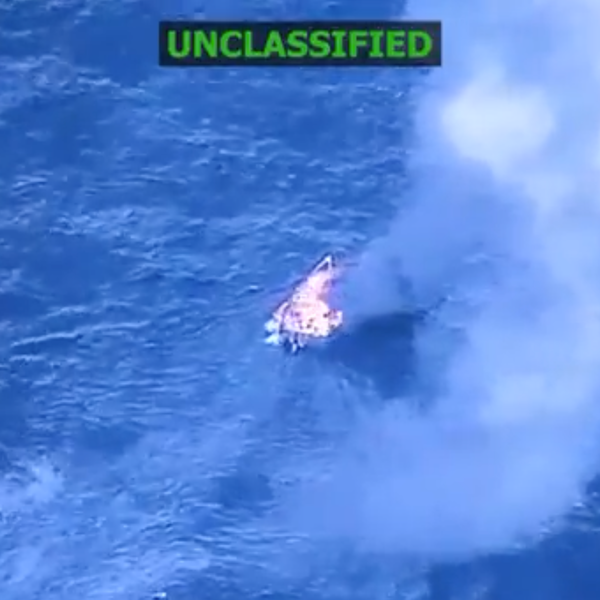
A Democratic senator is raising concerns about President Donald Trump potentially relying on the same rationale he’s used to justify military strikes on purported drug trafficking vessels to kill American citizens on US soil.
In an interview with the Intercept, Sen. Tammy Duckworth (D-Ill.) argued that Trump’s boat strikes in the Caribbean and the Pacific Ocean have been flatly illegal under both domestic and international law.
Diving into specifics, Duckworth explained that the administration has been justifying its boat-bombing spree by arbitrarily declaring suspected drug traffickers as being part of “designated terrorist organizations,” which the senator noted was “not grounded in US statute nor international law, but in solely what Trump says.”
Many other legal experts have called the administration’s strikes illegal, with some going so far as to call them acts of murder.
Duckworth, a military veteran, also said it was not a stretch to imagine Trump placing terrorist designations on US citizens as well, which would open up the opportunity to carry out lethal strikes against them.
“If Trump is using this justification to use military force on any individuals he chooses—without verified evidence or legal authorization—what’s stopping him from designating anyone within our own borders in a similar fashion and conducting lethal, militarized attacks against them?” Duckworth asked. “This illegal and dangerous misuse of lethal force should worry all Americans, and it can’t be accepted as normal.”
Independent journalist Ken Klippenstein reported last week that Attorney General Pam Bondi recently wrote a memo that directed the Department of Justice (DOJ) to compile a list of potential “domestic terrorism” organizations that espouse “extreme viewpoints on immigration, radical gender ideology, and anti-American sentiment.”
The memo expanded upon National Security Presidential Memorandum-7 (NSPM-7), a directive signed by Trump in late September that demanded a “national strategy to investigate and disrupt networks, entities, and organizations that foment political violence so that law enforcement can intervene in criminal conspiracies before they result in violent political acts.”
The Intercept revealed that it reached out to the White House, the DOJ, and the US Department of Defense and asked whether the tactics used on purported Caribbean drug traffickers could be deployed on the US citizens that wind up on Bondi’s list of extremists. All three entities, reported the Intercept, “have, for more than a month, failed to answer this question.”
The DOJ, for instance, responded the Intercept‘s question about using lethal force against US citizens by saying that “political violence has no place in this country, and this Department of Justice will investigate, identify, and root out any individual or violent extremist group attempting to commit or promote this heinous activity.”
Rebecca Ingber, a former State Department lawyer and current professor at Cardozo Law School, told the Intercept that the administration’s designation of alleged cartel members as terrorists shows that there appears to be little limit to its conception of the president’s power to deploy deadly force at will.
“This is one of the many reasons it is so important that Congress push back on the president’s claim that he can simply label transporting drugs an armed attack on the United States and then claim the authority to summarily execute people on that basis,” Ingber explained.
The Intercept noted that the US government “has been killing people—including American citizens, on occasion—around the world with drone strikes” for the past two-and-a-half decades, although the strikes on purported drug boats represent a significant expansion of the use of deadly force.
Nicholas Slayton, contributing editor at Task and Purpose, pointed the finger at former President Barack Obama for pushing the boundaries of drone warfare during his eight years in office.
“Really sucks that Obama administration set a legal precedent for assassinating Americans,” he commented on Bluesky.
"The American public is demanding decisive action to end US complicity in the Israeli government’s war crimes by stopping the flow of weapons to Israel."
By Brad Reed
Jewish Voice for Peace Action on Friday led a coalition of groups demanding that the Democratic Party stop providing arms to the Israeli government.
Speaking outside the Democratic National Committee’s Winter Meeting in Los Angeles, Jewish Voice for Peace Action (JVP Action) held a press conference calling on Democrats to oppose all future weapons shipments to Israel, whose years-long assault on Gaza has, according to one estimate, killed more than 100,000 Palestinian people.
While carrying banners that read, “Stop Arming Israel,” speakers at the press conference also called on Democrats to reject money from the American Israeli Political Action Committee (AIPAC), which has consistently funded primary challenges against left-wing critics of Israel.
JVP Action was joined at the press conference by representatives from Health Care 4 US (HC4US), Progressive Democrats of America, the Council on American-Islamic Relations Action (CAIR Action), and the United Teachers of Los Angeles (UTLA) Board of Directors.
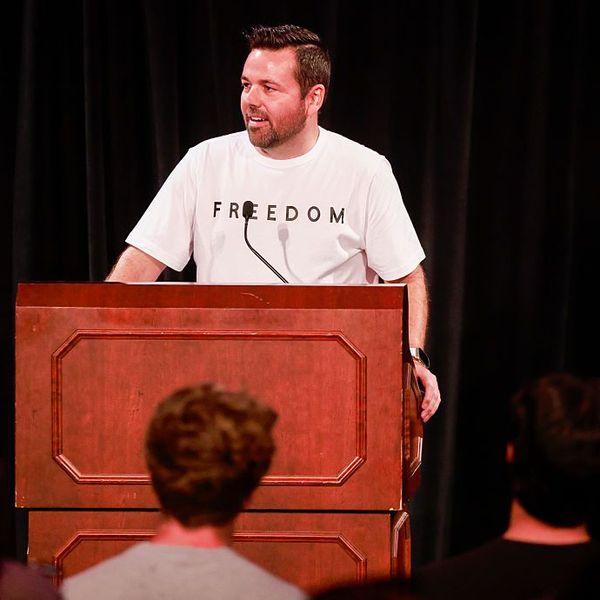
Estee Chandler, founder of the Los Angeles chapter of Jewish Voice for Peace, warned Democrats at the press conference that they risked falling out of touch with public opinion if they continued to support giving weapons to Israel.
“The polls are clear,” Chandler said. “The American public is demanding decisive action to end US complicity in the Israeli government’s war crimes by stopping the flow of weapons to Israel, and the Democratic Party refusing to heed that call will continue to come at their own peril.”
The press conference came a day after the progressive advocacy group RootsAction and journalist Christopher D. Cook released an “autopsy” report of the Democratic Party’s crushing 2024 losses, finding that the party’s support for Israel’s assault on Gaza contributed to last year’s election results.
Chandler also called on Democrats to get behind the Block the Bombs Act, which currently has 58 sponsors, and which she said “would block the transfer of the worst offensive weapons from being sent to Israel, including bombs, tank rounds, and artillery shells that are US-supplied and have been involved in the mass killing of Palestinian civilians and the grossest violations of international law in Gaza.”
Although there has technically been a ceasefire in place in Gaza since October, Israeli forces have continued to conduct deadly military operations in the enclave that have killed hundreds of civilians, including dozens of children.
Ricardo Pires, a spokesperson for the United Nations Children’s Fund, said last month that the number of deaths in Gaza in recent weeks has been “staggering” given that they’ve happened “during an agreed ceasefire.”
“In my country, I prosecuted terrorists and drug lords," said Judge Luz Ibáñez Carranza of Peru. "I will continue my work."
By Brett Wilkins
International Criminal Court judges remain steadfast in their pursuit of justice—including for victims of Israel’s genocidal war on Gaza—even as they suffer from devastating US sanctions, some of the affected jurists said in recent interviews.
Nine ICC officials are under sanctions imposed in two waves earlier this year by the Trump administration following the Hague-based tribunal’s issuance of arrest warrants for Israeli Prime Minister Benjamin Netanyahu and former Israeli Defense Minister Yoav Gallant for alleged crimes against humanity and war crimes in Gaza, including murder and forced starvation. The tribunal also issued warrants for the arrest of three Hamas officials, all of whom have been killed by Israel during the course of the war.
The sanctioned jurists are: Chief Prosecutor Karim Khan (United Kingdom), Deputy Prosecutor Nazhat Shameem Khan (Fiji), Deputy Prosecutor Mame Mandiaye Niang (Senegal), Judge Solomy Balungi Bossa (Uganda), Judge Luz del Carmen Ibáñez Carranza (Peru), Judge Reine Adelaide Sophie Alapini-Gansou (Benin), Judge Beti Hohler (Slovenia), Judge Nicolas Yann Guillou (France), and Judge Kimberly Prost (Canada).
The sanctions followed a February executive order from US President Donald Trump sanctioning Khan and accusing the ICC of “baseless actions targeting America and our close ally Israel.”
The sanctions—which experts have called an act of criminal obstruction—prevent the targeted ICC officials and their relatives from entering the United States; cut off their access to financial services including banking and credit cards; and prohibit the use of online services like email, shopping, and booking sites.
Fearing steep fines and other punitive measures including possible imprisonment for running afoul of US sanctions by providing “financial, material, or technological support” to targeted individuals, businesses and other entities strictly blacklist sanctioned people—who are typically terrorists, organized crime leaders, and political or military leaders accused of serious human rights crimes.
“Your whole world is restricted,” Prost—who was part of an ICC appellate chamber’s unanimous 2020 decision to investigate alleged US war crimes and crimes against humanity in Afghanistan—told the Associated Press on Thursday. “I’ve worked all my life in criminal justice, and now I’m on a list with those implicated in terrorism and organized crime.”
Ibáñez Carranza said the US sanctions are not deterring her, telling the AP: “In my country, I prosecuted terrorists and drug lords. I will continue my work.”
Guillou told Le Monde last week that the sanctions mean he is banned from almost all digital services—including Amazon and PayPal—in a world dominated by US tech giants. This has led to some absurd scenarios, including having a hotel reservation he booked via Expedia in his own country canceled.
“To be under sanctions is like being transported back to the 1990s,” he said.
The Trump administration’s objective, said Guillou, is “intimidation... permanent fear, and powerlessness.”
“European citizens under US sanctions will be wiped out economically and socially within the [European Union],” he added.
Guillou remains defiant in the face of sweeping hardship caused by the sanctions, contending that he is part of a larger struggle for justice as, “empires are hitting back” in response to “three decades of progress in multilateralism.”
The US—which, like Israel, is not party to the Rome Statute that governs the ICC—has been at odds with the court for decades. In 2002, Congress passed, and then-President George W. Bush signed, the American Service Members’ Protection Act—also known as the Hague Invasion Act—which authorizes the president to use “all means necessary and appropriate” including military intervention to secure the release of American or allied personnel held by or on behalf of the ICC.
During his first term, Trump sanctioned then-ICC Chief Prosecutor Fatou Bensouda and Prosecution Jurisdiction Division Director Phakiso Mochochoko over the Afghan war crimes probe.
The nine jurists sanctioned this year by the US are seeking relief and are calling on European governments to invoke the EU’s so-called “Blocking Statute,” which is meant to shield officials of the 27-nation bloc from the extraterritorial application of third country laws.
“States parties [to the Rome Statute] face a choice: Continue to capitulate to the bullying of the US, or meet the challenge posed by the sanctions, past and future, and respond appropriately,” Jens Iverson, an assistant professor of international law at Leiden University in the Netherlands, wrote last month for OpinioJuris. “Which choice they make will reveal the actual values of the states who as a matter of law are pledged to combat atrocity and impunity.”
Ibáñez Carranza told Middle East Eye in a recent interview: “What we are asking are practical measures. What we are asking is action. We need the support of the entire world. But we are in Europe now, and Europe is a powerful structure. The European Union is a powerful structure. They should react as such. They cannot be subordinated to the American policies.”
Ibáñez Carranza said that said measures should be taken “to support the court, not only to support the judges, but to support the system... of Rome.”
“It’s not only the judges” who are affected by the US sanctions, she asserted. “They want to affect the system of Rome, the system of the court, where we deliver justice for... the most defenseless and vulnerable victims... They are the affected ones with this.”
“The work of the International Criminal Court is for humanity,” Ibáñez Carranza added. “And this is why we are resilient, and this is why we need not only to stand together as judges, but the entire international community.”
"I’m fairly gravely concerned that he’s sleepwalking us into a war with Venezuela," said one US senator.
By Jake Johnson
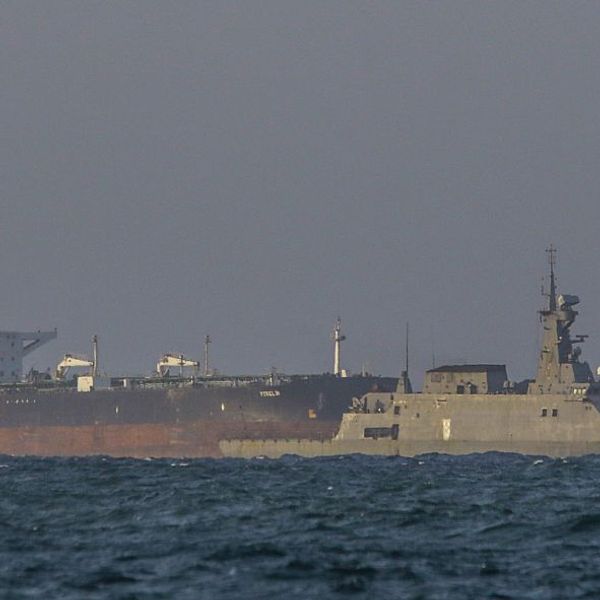
The Trump White House indicated Thursday that the administration is planning to seize more Venezuelan oil vessels after the president of the South American nation, Nicolás Maduro, denounced the US takeover of a tanker earlier this week as “an act of international piracy.”
Reuters reported Thursday that the Trump administration, which has claimed without evidence to be targeting drug traffickers, “is preparing to intercept more ships transporting Venezuelan oil” as it ramps up its lawless military campaign in the Caribbean and eastern Pacific—and threatens a direct military assault on Venezuela.
In response to the Reuters story, which cited six unnamed sources, White House Press Secretary Karoline Leavitt declared that “we’re not going to stand by and watch sanctioned vessels sail the seas with black market oil, the proceeds of which will fuel narcoterrorism of rogue and illegitimate regimes around the world.”
The US seizure of the Venezuelan tanker and its oil earlier this week marked the Trump administration’s latest escalation in what experts and critics fear is a march to an unlawful, all-out war with the South American country.
“I have no idea why the president is seizing an oil tanker,” US Sen. Chris Coons (D-Del.) said Thursday. “I’m fairly gravely concerned that he’s sleepwalking us into a war with Venezuela.”
Mark Cancian, a senior adviser at the Center for Strategic and International Studies, told Al Jazeera that the oil vessel seizure “is certainly an escalation designed to put additional pressure on the Maduro regime, causing it to fracture internally or convincing Maduro to leave.”
“The purpose also depends on whether the US seizes additional tankers,” he added. “In that case, this looks like a blockade of Venezuela. Because Venezuela depends so heavily on oil revenue, it could not withstand such a blockade for long.”
US lawmakers in both the House and Senate are pursuing war powers resolutions aimed at preventing the Trump administration from engaging in military conflict with Venezuela without congressional approval.
“Whatever this is about, it has nothing to do with stopping drugs,” said US Rep. Jim McGovern (D-Mass.). “To me, this appears to be all about creating a pretext for regime change. And I believe Congress has a duty to step in and assert our constitutional authority. No more illegal boat strikes, and no unauthorized war in Venezuela.”
Some Indiana Republicans vocally objected to the president's pressure campaign, with one saying Hoosiers "don’t like to be bullied in any fashion."
By Brad Reed
Republican Indiana Lt. Gov. Micah Beckwith posted and subsequently deleted a claim that President Donald Trump had threatened to cut off funding to his state unless its legislators approved a mid-decade gerrymander that would have changed the composition of its congressional map to further favor the GOP.
Just over four hours after the Republican-led Indiana state Senate on Thursday voted down the Trump-backed gerrymander—which would have changed the projected balance of Indiana’s current congressional makeup from seven Republicans and two Democrats to a 9-0 map in favor of the GOP—Beckwith took to X to warn that the Hoosier State would soon be feeling the president’s wrath.
“The Trump admin was VERY clear about this,” he wrote, referring to threats to take away federal funding for Indiana. “They told many lawmakers, cabinet members, and the [governor] and I that this would happen. The Indiana Senate made it clear to the Trump admin today that they do not want to be partners with the [White House]. The WH made it clear to them that they’d oblige.”
Although Beckwith deleted his post, he also confirmed to Politico reporter Adam Wren that the White House said that Indiana could lose out on funding for projects if the state did not approve the map, although Beckwith insisted that this was not a “threat” but merely “an honest conversation about who the White House does want to partner with.”
Earlier on Thursday, the X account for right-wing advocacy group Heritage Action, a sister organization of the Heritage Foundation think tank, claimed that Trump had threatened to decimate Indiana’s state finances unless the state Senate approved his proposed gerrymander.
“President Trump has made it clear to Indiana leaders: if the Indiana Senate fails to pass the map, all federal funding will be stripped from the state,” Heritage Action wrote. “Roads will not be paved. Guard bases will close. Major projects will stop. These are the stakes and every NO vote will be to blame.”
Trump has not yet publicly threatened to cut off Indiana’s federal funds, and it’s not clear that the administration actually plans to punish the state for defying the president.
According to a Thursday report from CNN, the Trump White House pressure campaign against Republican Indiana state senators backfired because many legislators resented being subjected to angry threats from Trump supporters, including some incidents in which lawmakers were swatted at their homes.
Republican Indiana state Sen. Jean Leising told CNN that the all-out pressure campaign waged by the president ended up pushing more people into opposing his agenda.
“You wouldn’t change minds by being mean,” Leising said. “And the efforts were mean-spirited from the get-go. If you were wanting to change votes, you would probably try to explain why we should be doing this, in a positive way. That never happened, so, you know, I think they get what they get.”
Fellow Republican Indiana state Sen. Sue Glick echoed Leinsing’s assessment, and said that blunt-force threats against legislators were doomed to failure.
“Hoosiers are a hardy lot, and they don’t like to be threatened,” Glick said. “They don’t like to be intimidated. They don’t like to be bullied in any fashion. And I think a lot of them responded with, ‘That isn’t going to work.’ And it didn’t.”
Indiana’s rejection of the proposed gerrymander this week was a major blow to Trump’s unprecedented mid-decade redistricting crusade, which began in Texas and subsequently spread to Missouri and North Carolina.
"These disturbing images raise even more questions about Epstein and his relationships with some of the most powerful men in the world."
By Common Dreams Staff
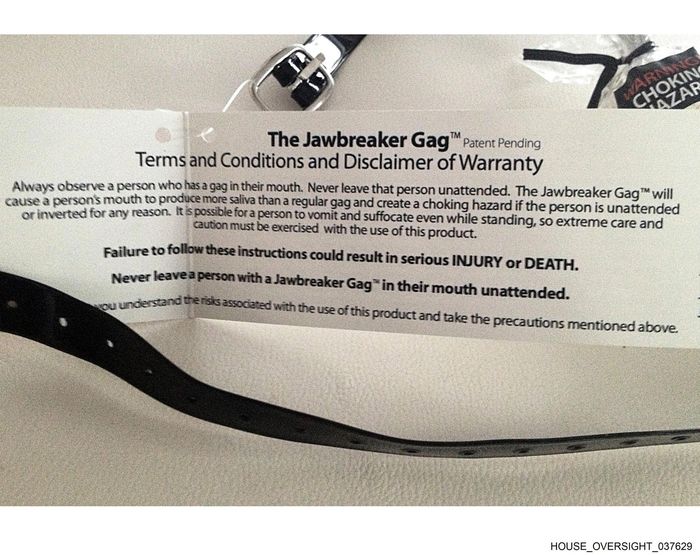
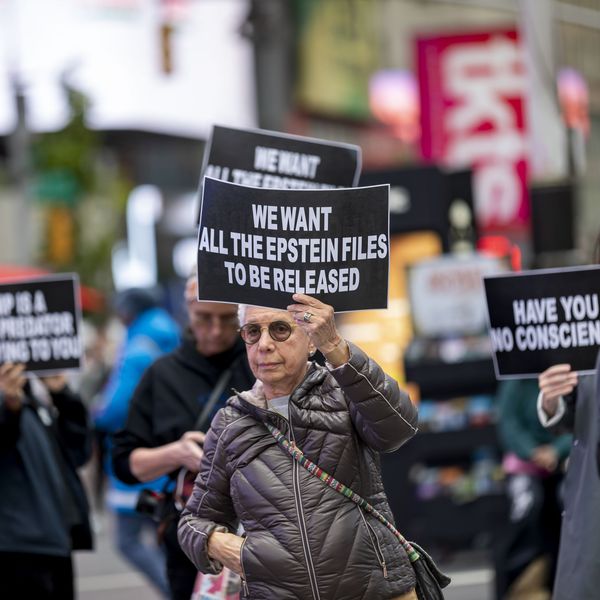
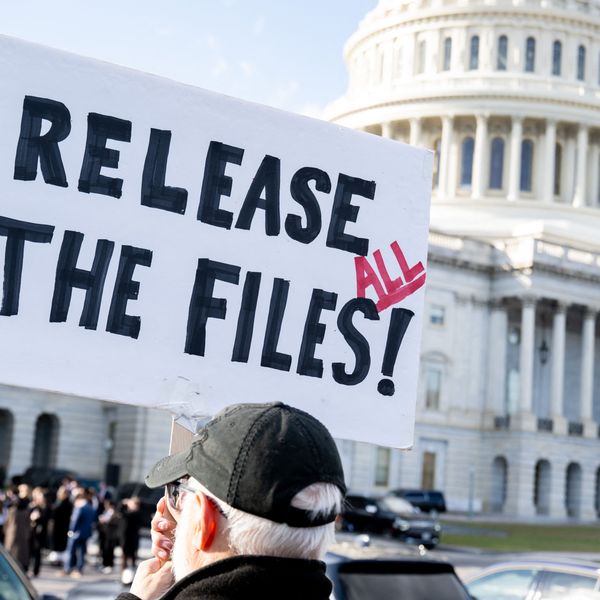
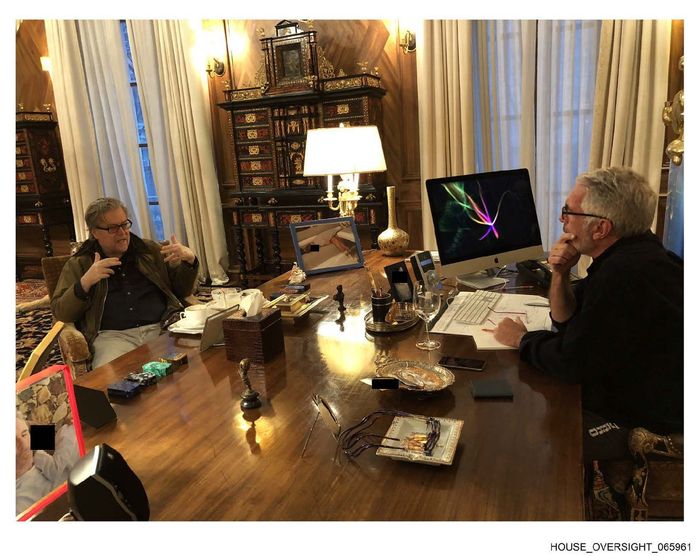
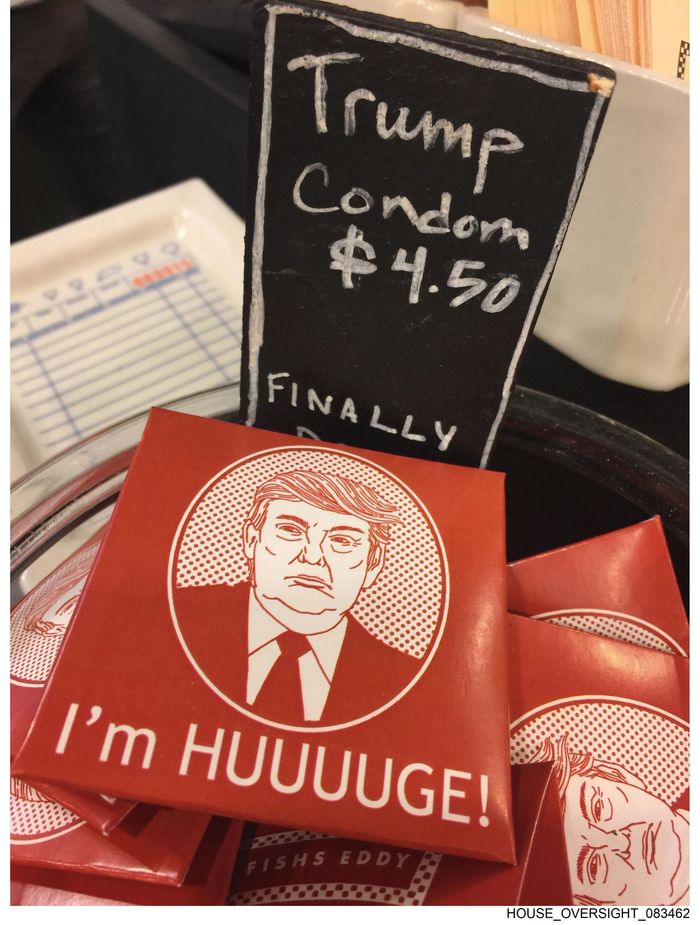
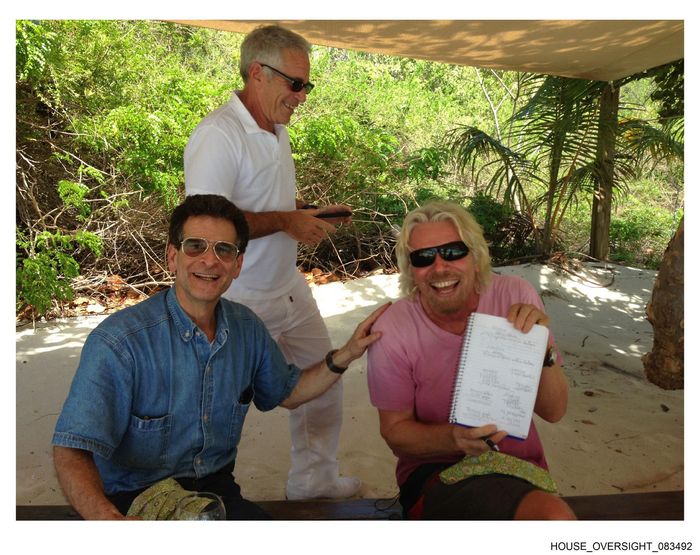
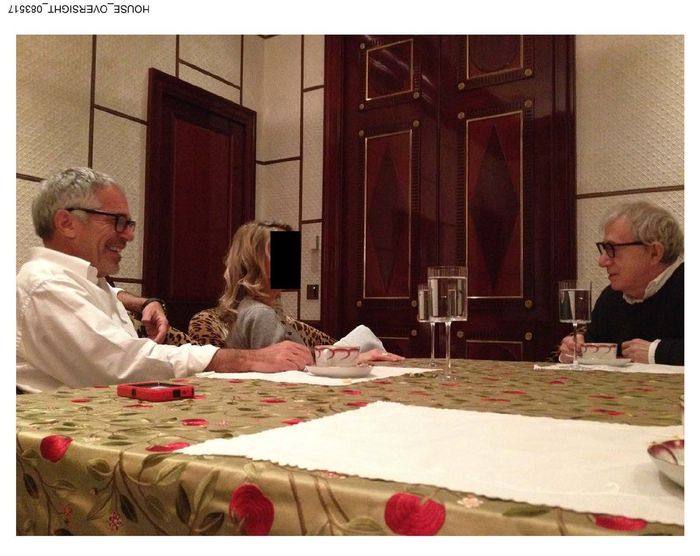
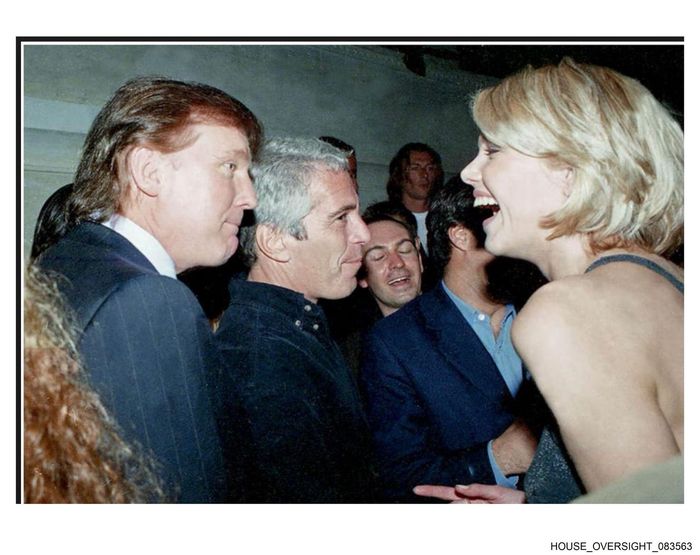
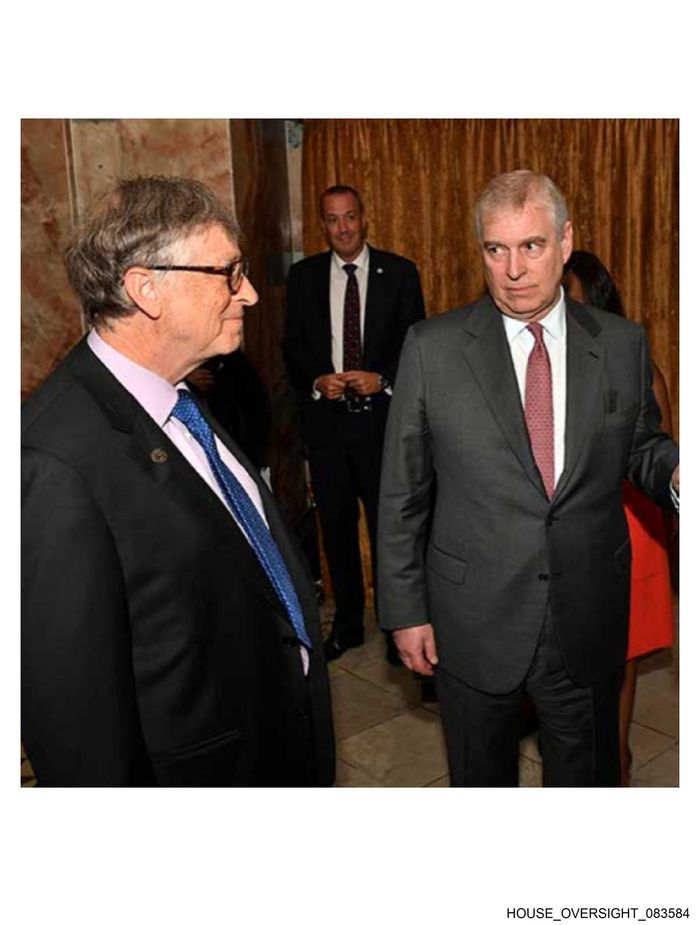
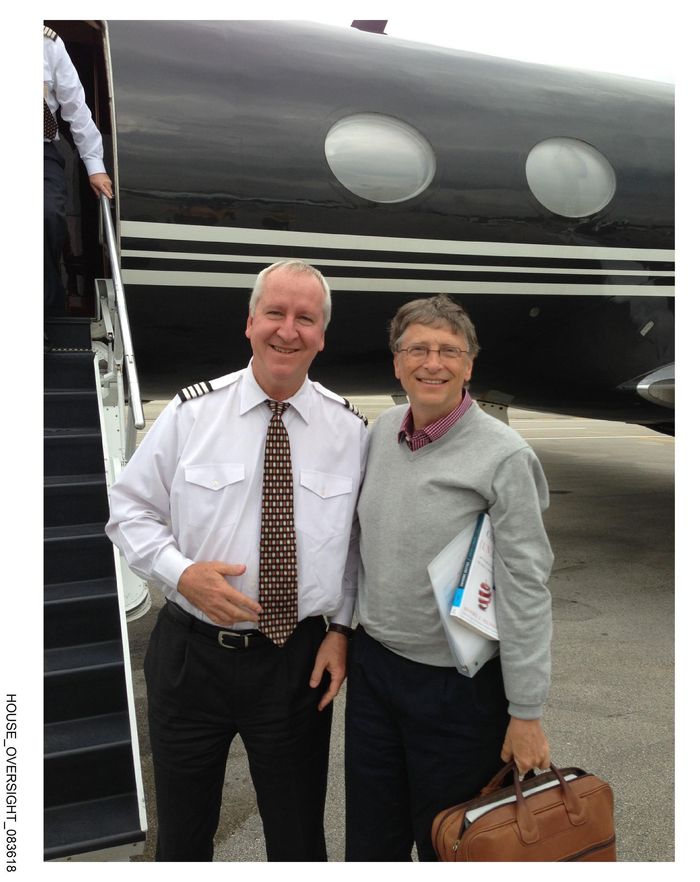
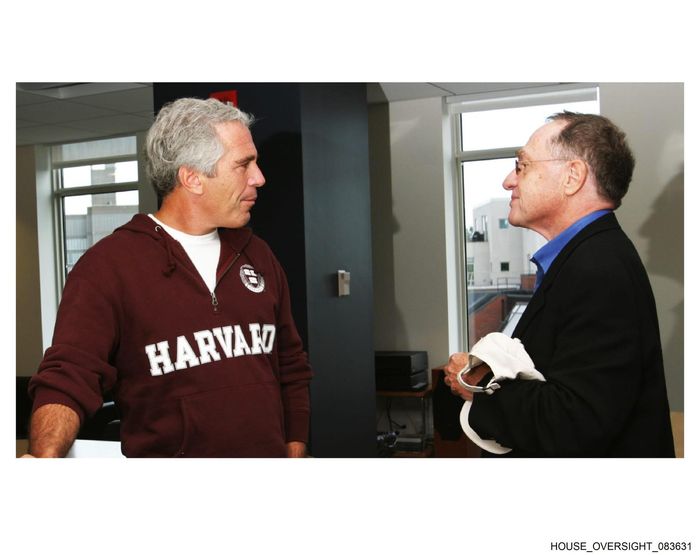
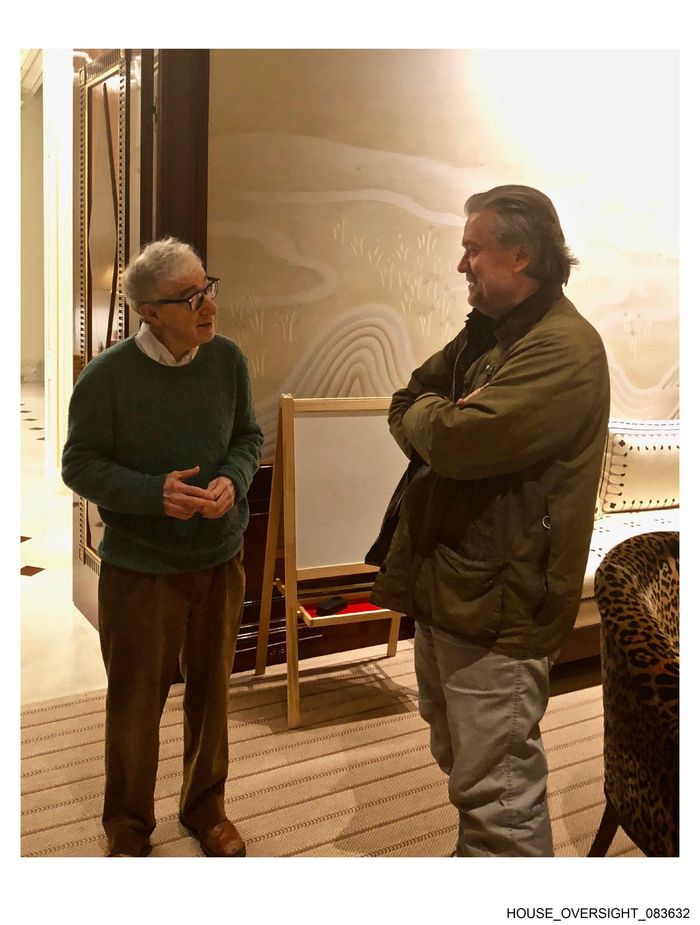
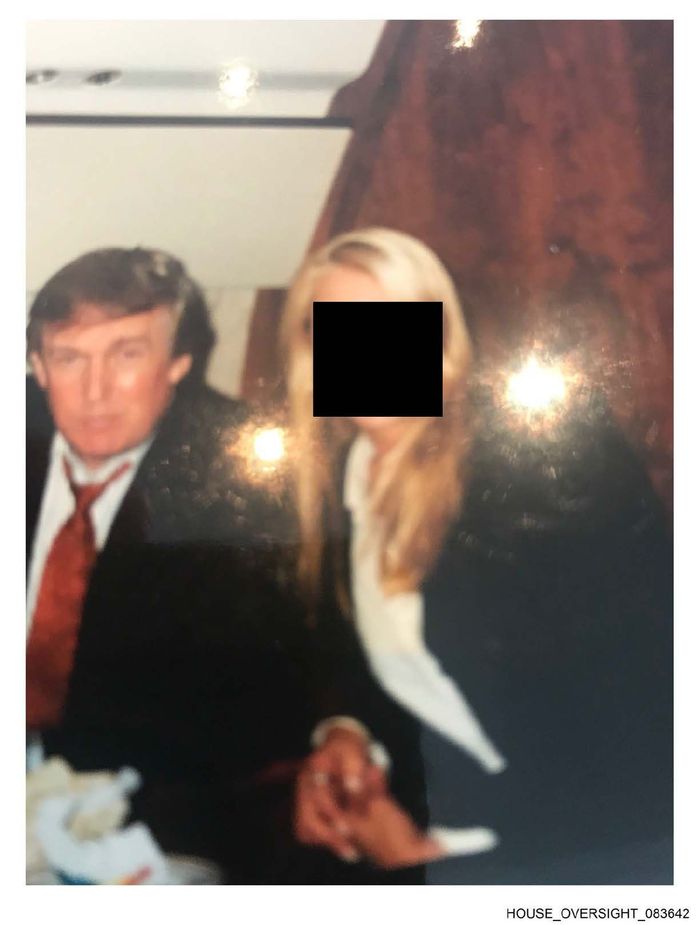
US House Committee on Oversight and Reform Democrats on Friday released 19 of the 95,000 new photos they just received from the estate of deceased sex offender Jeffrey Epstein, as the Department of Justice is preparing to release its files from the federal case against President Donald Trump’s former friend following votes in Congress.
“These disturbing images raise even more questions about Epstein and his relationships with some of the most powerful men in the world,” the committee’s Democrats said on social media, with a link to the photos, all of which Common Dreams has included below, on Dropbox. “Time to end this White House cover-up. Release the files!”
The photos feature sex toys, Trump condoms, and high-profile figures including the president, film director Woody Allen, former Trump adviser Steve Bannon, former President Bill Clinton, lawyer Alan Dershowitz, former Treasury Secretary Larry Summers, billionaires Richard Branson and Bill Gates, and Andrew Mountbatten-Windsor, previously known as Prince Andrew of United Kingdom.
The committee’s Democrats received the photos on Thursday night and have reviewed “maybe about 25,000... so far,” Ranking Member Robert Garcia (D-Calif.) told CNBC. “There’s an enormous amount of photos we have not gone through... It will take days and weeks to ensure that we got those photos and that a redaction is done in the appropriate way.”
“Obviously there are photos of powerful men, and folks that we want to have an opportunity to speak with and ask questions of,” Garcia said, noting that some shots Epstein took himself and others may have been sent to him. “Some of the other photos that we did not put out today are incredibly disturbing.”

























Geen opmerkingen:
Een reactie posten
Opmerking: Alleen leden van deze blog kunnen een reactie posten.