
31 July 25

How Europe took Trump for a ride
But notice my wording: apparent concessions. The optics of the Trump-EU deal were humiliating, and optics matter. If you examine the substance, however, it starts to look as if Europe played Trump for a fool. Specifically, a fossil fool.
The EU made two sort-of pledges to Trump. First, that it would invest $600 billion in the United States. Second, that it would buy $750 billion worth of U.S. energy, mainly oil and gas, over the next three years. The first promise was empty, while the second was nonsense.
About those investments: European governments aren’t like China, which can tell companies where to put their money. And the European Commission, which made the trade deal, isn’t even a government — it can negotiate tariffs but otherwise has little power. On Sunday Politico spoke with Commission officials, who effectively confirmed that the investment pledge was meaningless:
[S]peaking Monday, two senior European Commission officials clarified that money would come exclusively from private European companies, with public investment contributing nothing.
“It is not something that the EU as a public authority can guarantee. It is something which is based on the intentions of the private companies,” said one of the senior Commission officials. The Commission has not said it will introduce any incentives to ensure the private sector meets that $600 billion target, nor given a precise timeframe for the investment.
So what the EU actually promised on investment was nothing, Nichts, rien.
The pledge to increase U.S. energy exports was a lot more specific and gave a timeframe. But it’s not going to happen. In fact, it’s going to not happen on three levels.
First, the European Commission, which can’t tell the private sector where to invest, is equally unable to tell the private sector where to buy oil and gas. How would that even work?
Second, the promised level of EU imports is probably physically impossible. Shipping liquefied natural gas (LNG), in particular, requires specialized infrastructure at both ends. On the US side, LNG terminals are already operating at capacity, while Europe’s LNG facilities are “stretched to their limits.” The EU just promised to vastly increase energy imports from America over the next three years, but it’s doubtful whether Europe could build any of the infrastructure needed before the end of that period, even with a crash investment program.
And why would anyone undertake such an investment program in a continent that is rapidly shifting toward renewable energy? As one energy analyst told the Financial Times,
European gas demand is soft and energy prices are falling. In any case, it is private companies not states that contract for energy imports. Like it or not, in Europe the windmills are winning.
Emphasis added because as everyone knows, Trump has a blind, irrational hatred for wind power.
Finally, even if Europe somehow managed to overcome the legal and physical obstacles to buying a lot more fossil fuels from America, both oil and LNG are fungible commodities traded on global markets. This means that any increase in purchases from Europe would reroute U.S. exports rather than increasing them: We’d sell more to Europe but less to, say, Japan and China.
So a big increase in U.S. energy exports driven by demand from Europe is not going to happen. But how will Europe explain its failure to follow through?
It might not have to. Back during Trump’s first term, China promised to buy a lot of U.S. agricultural goods but never did. As far as I know, Trump never made an issue of it. He got to announce a big deal, then lost interest.
INCOMPETENT CLOWN PETER NAVARRO NEGOTIATED A TRADE DEAL WITH CHINA THAT THEY'RE STILL LAUCHING ABOUT!
And if the issue does come up, if there’s one thing officials at the European Commission are really good at — maybe better than anyone else on earth — it’s bureaucratic delay and obfuscation. Maybe at some point big, strong European men with tears in their eyes will meet with Trump and say, “Sir, we have a temporary hangup over clause #14159 of the 1986 Single European Act. But we’ll get it cleared up any day now.”
Bottom line: Whatever Trump may think, Europe is not going to provide a big boost to U.S. fossil fuel production. He won’t like that, if anyone tells him. But the rest of us should be glad. As I’ve written before, renewables are clearly the energy technology of the future. Trump and his allies are Luddites, trying to stand in the way of progress and keep us burning fossil fuels. Their “burn, baby, burn” obsession is very bad for America and the world. But at least we can be reasonably sure that Europe won’t help, um, fuel that obsession.
 President Donald Trump walks from Marine One after arriving on the South Lawn of the White House, Tuesday, July 29, 2025, in Washington. (photo: Julia Demaree Nikhinson/AP)
More than 60 companies, including major tech companies like Google, Amazon and Apple as well as health care giants like UnitedHealth Group and CVS Health, have agreed to share patient data in the system. The initiative will focus on diabetes and weight management, conversational artificial intelligence that helps patients, and digital tools such as QR codes and apps that register patients for check-ins or track medications.
“For decades America’s health care networks have been overdue for a high tech upgrade,” President Donald Trump said during an event with company CEOs at the White House on Wednesday. “The existing systems are often slow, costly and incompatible with one another, but with today’s announcement, we take a major step to bring health care into the digital age.”
The system, spearheaded by an administration that has already freely shared highly personal data about Americans in ways that have tested legal bounds, could put patients’ desires for more convenience at their doctor’s office on a collision course with their expectations that their medical information be kept private.
“There are enormous ethical and legal concerns,” said Lawrence Gostin, a Georgetown University law professor who specializes in public health. “Patients across America should be very worried that their medical records are going to be used in ways that harm them and their families.”
Officials at the Centers for Medicare and Medicaid Services, who will be in charge of maintaining the system, have said patients will need to opt in for the sharing of their medical records and data, which will be kept secure.
Those officials said patients will benefit from a system that lets them quickly call up their own records without the hallmark difficulties, such as requiring the use of fax machines to share documents, that have prevented them from doing so in the past.
“We’re going to have remarkable advances in how consumers can use their own records,” Dr. Mehmet Oz, who leads the Centers for Medicare and Medicaid Services, said during the White House event.
Popular weight loss and fitness subscription service Noom, which has signed onto the initiative, will be able to pull medical records after the system’s expected launch early next year.
That might include labs or medical tests that the app could use to develop an AI-driven analysis of what might help users lose weight, CEO Geoff Cook told The Associated Press. Apps and health systems will also have access to their competitors’ information, too. Noom would be able to access a person’s data from Apple Health, for example.
“Right now you have a lot of siloed data,” Cook said.
Patients who travel across the country for treatment at the Cleveland Clinic often have a hard time obtaining all their medical records from various providers, said the hospital system’s CEO, Dr. Tomislav Mihaljevic. He said the new system would eliminate that barrier, which sometimes delays treatment or prevents doctors from making an accurate diagnosis because they do not have a full view of a patient’s medical history.
Having seamless access to health app data, such as what patients are eating or how much they are exercising, will also help doctors manage obesity and other chronic diseases, Mihaljevic said.
“These apps give us insight about what’s happening with the patient’s health outside of the physician’s office,” he said.
CMS will also recommend a list of apps on Medicare.gov that are designed to help people manage chronic diseases, as well as help them select health care providers and insurance plans.
Digital privacy advocates are skeptical that patients will be able to count on their data being stored securely.
The federal government, however, has done little to regulate health apps or telehealth programs, said Jeffrey Chester at the Center for Digital Democracy.
Health and Human Services Secretary Robert F. Kennedy Jr. and those within his circle have pushed for more technology in health care, advocating for wearable devices that monitor wellness and telehealth.
Kennedy also sought to collect more data from Americans’ medical records, which he has previously said he wants to use to study autism and vaccine safety. Kennedy has filled the agency with staffers who have a history of working at or running health technology startups and businesses.
CMS already has troves of information on more than 140 million Americans who enroll in Medicare and Medicaid. Earlier this month, the federal agency agreed to hand over its massive database, including home addresses, to deportation officials.
The new initiative would deepen the pool of information on patients for the federal government and tech companies. Medical records typically contain far more sensitive information, such as doctors’ notes about conversations with patients and substance abuse or mental health history.
“This scheme is an open door for the further use and monetization of sensitive and personal health information,” Chester said.
The Trump administration tried to launch a less ambitious electronic record program in 2018 that did not get finalized during his first term, but it did not have buy in from major tech companies at the time.
 An explosion of a drone is seen during a a Russian drone strike, amid Russia's attack on Ukraine, in Kyiv, Ukraine July 30, 2025. (photo: Gleb Garanich/Reuters)
As the sun rose, emergency crews were putting out fires and cutting through concrete blocks in search for survivors across the capital. Ukraine's President Volodymyr Zelenskiy said Russia launched more than 300 drones and eight missiles.
"Today the world has once again seen Russia's response to our desire for peace with America and Europe. Therefore, peace without strength is impossible," Zelenskiy said on the Telegram app.
Russia's Defence Ministry said it targeted and hit Ukrainian military airfields and ammunition depots as well as businesses linked to what it called Kyiv's military-industrial complex.
Kyiv Mayor Vitali Klitschko said nine children were wounded, the largest number hurt in a single night in the city since Russia started its full-scale invasion almost three and a half years ago.
Explosions rocked Kyiv from about midnight onwards and blazes lit up the night sky.
Yurii Kravchuk, 62, stood wrapped in a blanket next to a damaged building, with a bandage around his head. He had heard the missile alert but did not get to a shelter in time, he told Reuters.
"I started waking up my wife and then there was an explosion. My daughter ended up in the hospital," he said.
Russia, which denies targeting civilians, has stepped up air strikes on Ukrainian towns and cities far from the front line of the war in recent months.
At one location, rescuers spent more than three hours getting to a man trapped in rubble by cutting through the wall of a neighbouring apartment, the Ministry of Internal Affairs said. He talked to the emergency services during the operation and was pulled out alive, it added.
A five-month-old baby was among the wounded, with five children hospitalized, the head of city military administration, Tymur Tkachenko, said on national television.
Schools and hospitals were among the buildings damaged across 27 locations in the city, officials said.
"The attack was extremely insidious and deliberately calculated to overload the air defence system," Zelenskiy wrote on X.
He posted a video of burning ruins, saying people were still trapped under the rubble of one partially-ruined residential building as of the morning.
The president said the attacks had killed a six-year-old and the boy's mother, but later edited the post to remove reference to the mother.
U.S. President Donald Trump said on Tuesday that the United States would start imposing tariffs and other measures on Russia "10 days from today" if Moscow showed no progress toward ending the conflict.
"This is Putin's response to Trump's deadlines," Prime Minister Yulia Svyrydenko said. "The world must respond with a tribunal and maximum pressure."
The air force reported five direct missile hits and 21 drone hits in 12 locations.
Ukrainian air defence units downed 288 drones and three cruise missiles, the air force added.
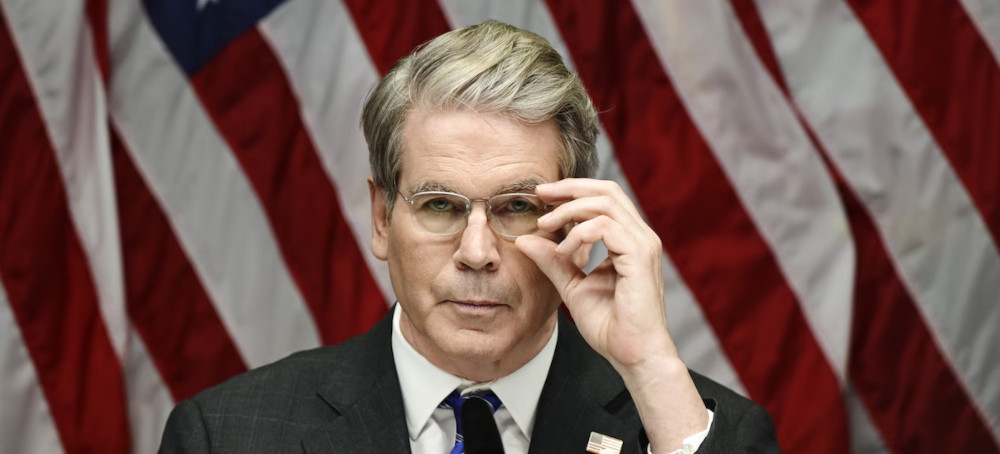 Treasury Secretary Scott Bessent attends a news conference in Stockholm during trade talks with China on Tuesday. (photo: Magnus Lejhall/EPA)
The “Trump accounts” were set up in the GOP’s new tax and spending law, the One Big Beautiful Bill.
The “Trump accounts” enacted as part of the One Big Beautiful Bill give newborns a $1,000 savings account that can be invested with tax-deferred treatment. Families or their employers can make $5,000 contributions to the accounts each year until the beneficiary turns 18.
The program is one of more popular components of the legislation, which Trump signed into law July 4, and borrows from proposals made for years by Democrats.
Speaking at an event Wednesday hosted by the conservative news site Breitbart, Bessent said the accounts will improve economic outcomes for babies and children and said the Treasury Department will use them to increase financial literacy among young people. He likened learning about sound investing practices to a child learning to take responsibility for a pet.
And Bessent added that if enrollees allowed their accounts to grow over decades and saw the benefits of compound interest, the accounts could in effect replace Social Security by allowing beneficiaries to accrue large and tax-preferred savings balances.
“At the end of the day, I’m not sure when the distribution level date should be. Should it be 30 and you can buy a house? Should it be 60? But in a way, it is a back door for privatizing Social Security,” Bessent said. “Social Security is a defined benefit plan paid out to the extent that if all of a sudden, if these accounts grow and you have hundreds of thousands of dollars for your retirement, then that’s a game changer.”
A Treasury spokesperson said in a statement that Trump accounts are an “additive government program” that along with Social Security benefits will “broaden and increase the savings and wealth of Americans.”
“Social Security is a critical safety net for Americans and always will be. This administration has not just fought tirelessly for seniors, but is also fighting for the next generation,” said the spokesperson, who spoke on the condition of anonymity, citing a department policy preventing them from speaking on the record.
Social Security benefits are financed by payroll taxes, and as the number of retirees booms, workers and employers are not paying enough into the trust fund to sustain future benefits.
Without action from Congress to overhaul the program’s finances, the trust fund that pays for it will be insolvent by 2033, according to June projections from the program’s trustees. That would force a 23 percent cut to benefits.
Those figures, though, do not account for policy changes in Trump’s landmark tax law. A bonus to the standard deduction for seniors could hasten Social Security’s insolvency date to 2032, according to the Committee for a Responsible Federal Budget, a nonpartisan Washington think tank.
“On one hand, what they are doing is they are making Social Security less solvent and a riskier proposition for people,” said Howard Gleckman, a senior fellow at the Urban-Brookings Tax Policy Center. “On the other hand, the treasury secretary seems to be musing out loud about the idea of beginning to privatize the system.”
Previous Republican administrations have discussed privatizing Social Security. President George W. Bush pitched partially privatizing the program with individual private investment accounts.
The idea was politically unpopular, and it contributed to historic losses for Republicans in the 2006 midterm elections, giving Democrats control of both chambers of Congress and largely ending the Bush administration’s legislative agenda.
“Today the Treasury Secretary said the quiet part out loud: Republicans’ ultimate goal is to privatize Social Security, and there isn’t a backdoor they won’t try to make Wall Street’s dream a reality,” Rep. Richard E. Neal (Massachusetts), the top Democrat on the tax-writing Ways and Means Committee, said in a statement. “For everyone else though, it’s yet another warning sign that they cannot be trusted to safeguard the program millions rely on and have paid into over a lifetime of work.”
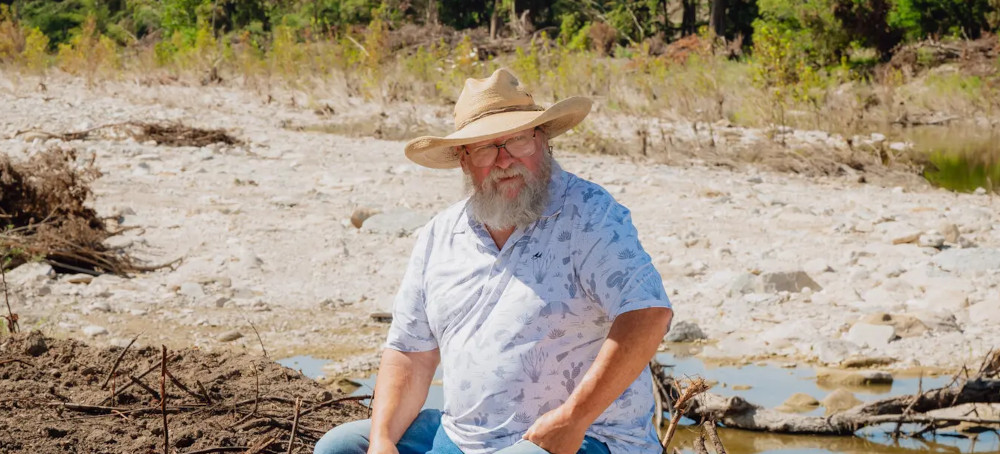 From the early days of the tragedy, officials in Kerr County have faced questions about the weak local government response and lack of alarm systems along the river. (photo: Desiree Rios/The New York Times)
From the early days of the tragedy, officials in Kerr County have faced questions about the weak local government response and lack of alarm systems along the river.
Mr. Richards, 67, has been waiting for help ever since, from federal, state or local officials who could aid in the search, pitch in money for those who need it or help clear land that, he said, “still looks like a bomb went off.”
“Not a damned penny came through this gate from my taxpaying dollars,” he said on Tuesday as he looked at the twisted trees and piles of debris that still litter his property and beyond. “And I don’t understand why.”
Mr. Richards is one of many residents planning to confront members of a Texas legislative committee on Thursday at a flood hearing in Kerr County, which suffered the brunt of the 136 known deaths in the Texas Hill Country. Kerr County’s 100 dead included at least 27 counselors and campers from devastated Camp Mystic, most of them from two cabins near the river.
From the early days of the tragedy, officials in Kerr County have faced questions about the weak local government response and lack of alarms systems along the river. They have been at a loss to explain why they failed to secure grant funding for a flood warning system in recent years.
Officials in Kerr County did not respond to requests for comment, but they will have a chance at Thursday’s hearing, which comes a week after W. Nim Kidd, the chief of the Texas Division of Emergency Management, directed the attention of a hearing in Austin toward local emergency managers, where he said “the responsibility of being in charge rests.”
Nearly a month after the floods, many volunteers from around the country, and around the globe, have packed up and left. Local and state officials have stopped holding media briefings to update the public. Areas like the hamlet of Hunt, Texas, where entire blocks were swept away by the aggressive waters, have been closed off to reporters and outsiders.
“I get that people have to go home and return to their lives,” Mr. Richards said, “but you can’t help but feel abandoned.”
Kerr County residents said this week they aren’t sure what to expect from the first visit by state officials since the deadly floods. Mr. Kidd initially appeared to blame the National Weather Service, whose initial weather forecasts did not predict the torrent that fell in the early hours of July 4. That triggered an angry response from the Trump administration before Mr. Kidd turned his attention to local officials.
For his part, Mr. Abbott has said that those looking for whom to blame were “losers.”
No one from the Kerr County government or the city of Kerrville, the county seat, were invited to testify at the hearing in Austin last week when Mr. Kidd pointed his finger at them. They will be on the hot seat on Thursday at the hearing in Kerrville, the county seat.
Abby Walston, who oversees a youth program at Trinity Church in Center Point, Texas, said she would rather roll up her sleeves than place blame.
“The big government is pointing fingers at our local government,” she said. “You know, you can play the blame game all day long, but at the end of the day, it was a horrible situation.”
“Now,” she said, “it’s just time to rally together and rebuild.”
Earlier this week, Ms. Walston was coordinating how best to help survivors over the weeks and months to come. She said she plans to set up deliveries of supplies for those in need, especially mothers of young children who need diapers and formula.
“They don’t all know that help is still available,” she said.
Many other areas outside Kerrville and Hunt have received a lot less attention, she said. She can point to a block near her church in the town of Center Point where homes remained shattered and many people are living in temporary recreational vehicles or on relatives’ couches.
It wasn’t long ago that scores of volunteers were buzzing around the property of Carol and Woody Chambless next to the Guadalupe River. This week, it was just Carol, 71, and Woody, 73, sitting next to a fan working overtime to keep them cool.
“We can use the attention from state officials and any ideas on how to help people,” Ms. Chambless said.
“We were the lucky ones,” Mr. Chambless said. “We lived. Many didn’t.”
Graciela Reyes, 70, became emotional thinking about the members of her local church who were swept away and all of the children who died trying to escape the rising water at Mystic Camp.
“My grandchildren are that age,” she said. “It breaks my heart.”
She said she understands that officials at all government levels don’t want to look backward, but she believed that studying what went wrong could save lives next time.
“It’s good that they are coming here and thinking of ways to prevent tragedies,” she said. “They keep telling us that there is no way they could have predicted this. But maybe, they should have.”
TEXAS ALWAYS FAILS TO PROTECT THEIR RESIDENTS!
THIS IS WHY NPR/PBS IS NEEDED TO REPORT FACTS!
Kerr County struggled to fund flood warnings. Under Trump, it's getting even harder
Years before the flooding took more than 90 lives in Kerr County, Texas, local officials knew residents faced threats from rapidly rising water. They started planning a flood warning system, one that could alert residents when a flash flood was imminent.
Still, like many other communities around the country, Kerr County struggled to find a way to pay for it. They turned to the largest source available for most localities: funding from the Federal Emergency Management Agency (FEMA).
FEMA has granted billions over the last five years to help communities prepare for disasters. The idea is one that has been proven on the ground: When communities invest in infrastructure and preparation before a disaster, it can dramatically lessen the damage when a disaster hits, as well as save lives.
BRAIN DEAD LOONEY LOOMER MAKES FALSE CLAIMS & MAGA MAGGOTS LISTEN?
EDUCATION? CONSPIRACY THEORIST!
BANNED FOR DISINFORMATION!
Laura Loomer attended Mount Holyoke College but left after one semester, claiming she felt targeted for her conservative views. She then transferred to Barry University in Florida, where she graduated in 2015 with a bachelor's degree in broadcast journalism.
 Political activist Laura Loomer stands across from the Women's March 2019 in New York City on January 19, 2019 in New York City. (photo: John Lamparski/Getty)
The right-wing influencer appears to be exercising major influence on administration personnel.
April Falcon Doss, a lawyer for the National Security Agency, was removed from her position last week after Loomer amplified criticism of her, according to an official familiar with the matter who spoke The New York Times. Loomer had shared a social media post about Doss that described her as a “far-left Democrat activist” and claimed that she “advocated for the de-banking and online censorship of conservatives.”
In a text message to the Times, Loomer appeared to take credit for Doss’s firing, telling the outlet that she had “reposted a tweet that exposed her last week and flagged it for the right people.” Doss, who worked for the NSA prior to becoming the general counsel, and is an expert is cybersecurity law, did not respond to a request for comment from the Times; the Pentagon did not immediately respond to the Times’ request for comment. In a statement, Senator Mark Warner, who sits on the Senate Intelligence Committee, called Doss “a deeply principled public servant,” and said “her dismissal appears to be the result of a politically motivated smear campaign driven by a far-right conspiracy theorist, not any legitimate concern about her conduct or qualifications.”
Doss’s firing comes several months after NSA director General Timothy Haugh and his deputy, Wendy Noble, were removed from their positions following complaints from Loomer that they were allegedly disloyal to Trump. (At the time, the reported that Noble was “potentially reassigned to another position at the Pentagon,” though it’s not clear if that happened.)
Meanwhile, on Wednesday, Dr. Vinay Prasad announced that he was stepping down as the Food and Drug Administration’s vaccine chief, saying via a spokesperson that he “did not want to be a distraction” and was leaving to “spend more time with his family.” While Prasad’s short tenure on the job was controversial from the start given his years as a vocal FDA critic, the Associated Press notes that “in recent weeks Prasad became a target of right-wing activists, including Laura Loomer, who flagged Prasad’s past statements criticizing Trump and praising liberal independent Senator Bernie Sanders.” In a post on X last week, Loomer wrote, “How did this Trump-hating Bernie Bro get into the Trump admin???”
A profile earlier this month on “Trump’s blunt instrument” chronicled Loomer’s clout in the White House, and also included critics on the right, such as Tucker Carlson,who has also been on the receiving end of her social media attacks. “She’s like a child wielding a loaded firearm called Twitter.” Carlson said. “I don’t blame her. I blame the adults who take her seriously.”


No comments:
Post a Comment
Note: Only a member of this blog may post a comment.